A volunteer on my transport leg had her dog clipped into the back of her wagon with one of those plain seat belt tethers, the short strap with a clip on each end. One end goes into the seat belt buckle. The other end goes on the collar. It took her about four seconds and she did it one handed while holding a coffee. I had Scout up on the tailgate by then, working the Kurgo Tru-Fit harness down over her head and counting adjustment points, and this woman looked at me the way you look at somebody who is doing it the hard way on purpose. That was nine months ago. I have thought about it a hundred times since, because she was right about the speed, and I still think she was wrong about the strap. Both of those things can be true at once.
Here is the short answer before I show my work. For a dog that rides most weeks, the Kurgo Tru-Fit harness is the better buy, because it does two jobs and because it decides where the load lands if you ever have to stop hard. For a calm dog that gets in the car six times a year and sleeps the whole way to the vet, a plain seat belt tether is a reasonable thing to own, and the people who call it reckless have usually never stood in a truck stop parking lot at seven in the morning with a strange dog and a schedule. The question is not which product is better. It is which dog you actually have.
The Two Things, Side by Side
| Kurgo Tru-Fit | Seat belt tether | |
|---|---|---|
| Crash testing | Listing says crash tested for dogs up to 75 lbs | Not crash tested. It is a strap |
| Where the load lands | Across the chest and shoulders, on a harness | On the collar, against the neck |
| Everyday walking | Leash attachments front and back, so it doubles as a walking harness | Car only. The dog still needs a collar and a leash |
| Time to put on | 5 adjustment points. The first fitting took most of a Saturday | Two clips, about four seconds |
| What it costs up front | Costs more, bought once | Costs less |
| Storage | Lives on the dog or in the gear bag | Fits in a glove box |
| Fitting a dog you just met | Needs a chest measurement checked against the size chart | Works with any collar in the car |
| Best for | A dog that rides most weeks, and every volunteer leg | A calm dog on short, occasional trips |
Read that table as a whole and you will notice my bias did not win every row. Four of those rows go to the strap, and they are real advantages, not consolation prizes. The three that go to the harness are the three I would not give up. That is the whole comparison in one sentence, and the rest of this is the reasoning behind it.
Where the Kurgo Tru-Fit Wins
Start with the row that only matters once. A harness spreads a pull across the chest and the shoulders, which is the widest and strongest part of a dog. A strap clipped to a collar puts all of it on the neck, which is the smallest part. If you have ever snapped a leash taut on a flat collar and watched a dog's whole front end jerk sideways, you have seen a small version of this at walking speed. I have watched it a hundred times at the rescue. The dog coughs, somebody says poor thing, and then everybody goes right back to doing it the same way. Put a tape around a terrier's neck and then around her chest and the difference is not subtle. Scout weighs eighteen pounds and the tape around her neck is a fraction of the tape around her ribs. Whatever force shows up in a hard stop has to go somewhere, and a two inch band of nylon across the throat is the worst place on the animal to send it.
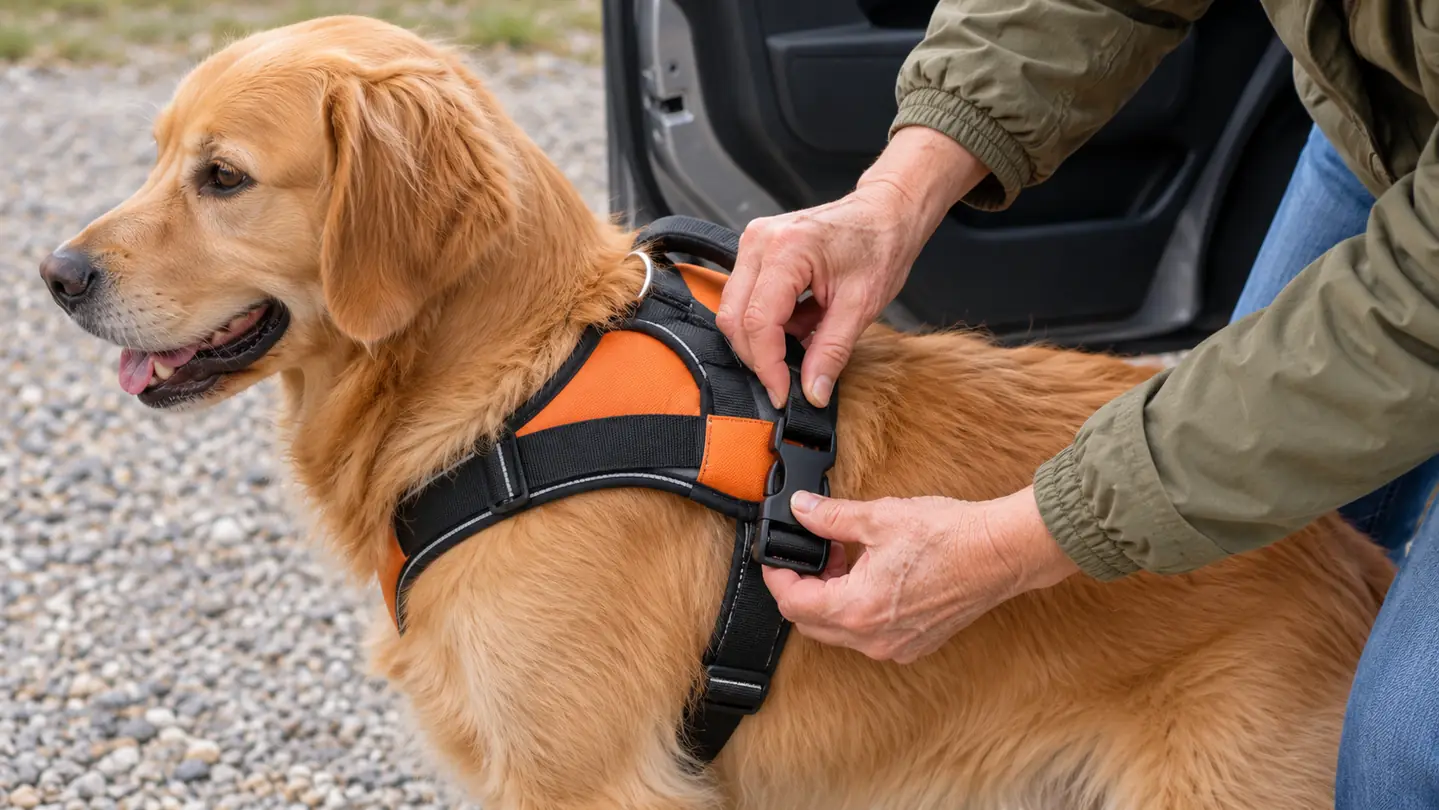
The second advantage is that the Kurgo is a harness first and a car part second. It has 5 adjustment points, leash attachments on the front and the back, and all steel nested buckles. Scout wears hers clipped in on the back seat on the drive down I-94, and then at the Tomah hand-off I clip a leash to the back ring and we walk the lot while we wait for the next driver. One piece of gear for the whole trip. A tether cannot do that, because a tether is a strap. It goes in the door pocket, and the dog still needs a collar and a leash at every single stop. On a transport Saturday that is four leash changes before nine in the morning: out of the car, around the grass strip, back in, and out again when the next driver pulls up. The harness handles all four without anything coming off the dog.
The third thing is what the listing is actually selling, and I will not dress it up into a promise. It says crash tested for dogs up to 75 lbs. I have never had to find out, and I am not going to tell you a harness makes your dog safe, because it does not and nobody can. What I can tell you is that the harness is the part with a test behind it and the strap is the part without one. That is a smaller claim than some harness reviews make and it is the one I can stand behind. Ask yourself what you would want the answer to be if somebody were writing it down afterward, and then buy the thing that has been tested.
Where a Plain Seat Belt Tether Wins
Four seconds, one hand, no instructions. There is nothing wrong with admitting that is worth something. I have watched a transport dog get unloaded, walked, watered and reloaded into a car in less time than it takes me to get Scout's left front strap sitting flat. If you are picking up your own dog from the same driveway every day, the tether is the thing you will actually use without grumbling, and a safety item you use is worth more than a better one that stays in the garage. The woman I watched had a coffee in her left hand and a phone tucked against her shoulder and she never set either one down. I need both hands and a full minute, and I have been doing this since the second week of February.
It costs less. That is the honest start of it and I am not going to pretend otherwise. It also stores anywhere. The glove box on my Outback already holds one of the collapsible bowls, and a tether would fit in there next to it with room left over for the registration and a spare poop bag. The harness lives on the dog or in the gear bag, and if it is wet from a stop it is coming home on the dog whether you planned that or not. In February that means a damp harness against a cloth seat, which is exactly why the hammock went in first.
The last advantage is the one I did not see coming. A strap does not care what size dog it goes on. A harness does. I measured Scout's chest against the size chart before I ordered, twice, with Dale holding the tape and me telling him to hold still like it was his fault. If you are a volunteer meeting a strange dog in a parking lot at seven in the morning, a strap that goes on anything with a collar has real value, and pretending otherwise would be me selling rather than explaining. I have handed a leash to a stranger holding a dog I had known for ninety seconds and been glad there was nothing to adjust.
The strap never decides where the load lands. The harness does.
Scout has worn the Kurgo Tru-Fit on every transport leg since February, clipped in on the back seat of the Outback, and again as her walking harness at every stop. Measure the chest and check it against the size chart before you pick a size.
Amazon Check Today's Price on Amazon →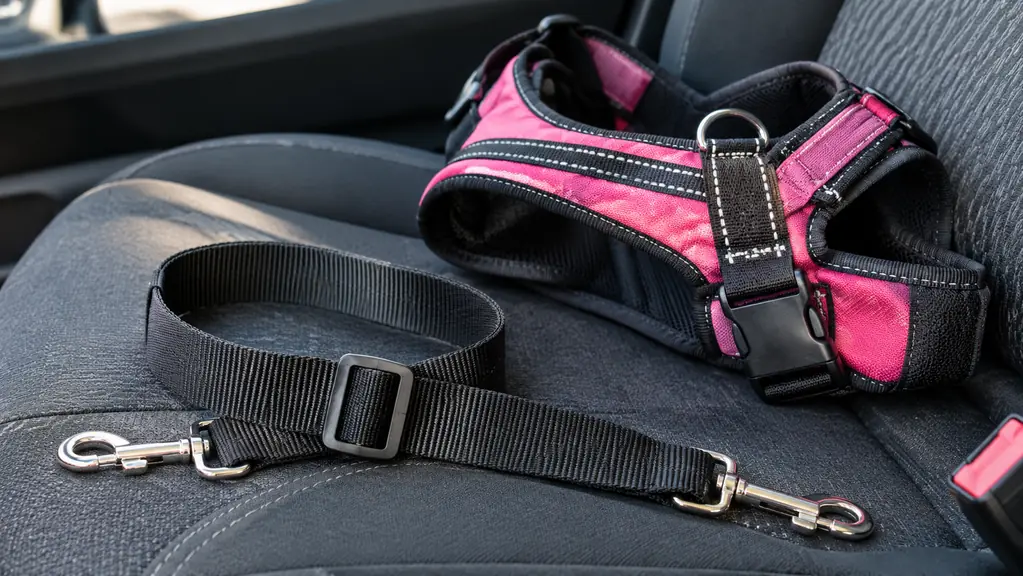
How Each One Actually Goes in My Outback
The harness took a long Saturday the first time. Five adjustment points is not a marketing number, it is five straps you have to get right, and I got two of them wrong before I got them right. It goes on over the head, which Scout tolerated and a panicky dog might not, so give yourself the time and do not do the first fitting ten minutes before you have to leave. After that first fitting it is a fifteen second job, and it stays where you set it. Hand wash only, which is a chore I save for a warm afternoon with the hose. My mistake the first time was doing the fitting in the car. Do it in the kitchen, on a hard floor, in good light, with the dog standing square and nothing on the radio. A strap folded under itself in a cold garage is how you end up adjusting the same harness four times and blaming the harness.
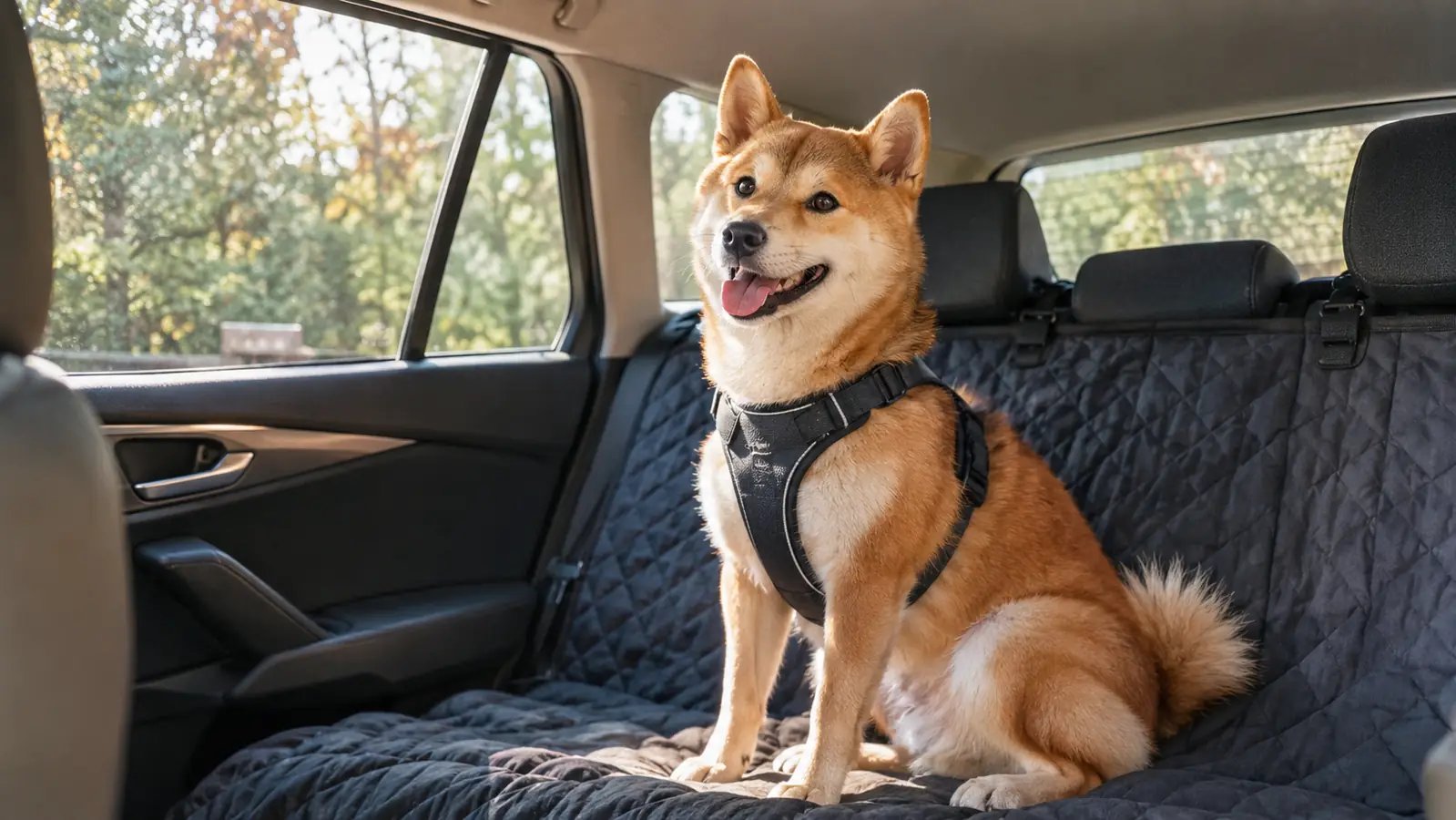
In the car she rides on the back seat hammock, rear driver side, clipped in. She is six and eighteen pounds and she has never been a dog who settles on a long ride, and the harness is the reason I can drive down I-94 without a hand leaving the wheel to push her off the console. That is the part I would pay for again. Not the tested number, although I am glad it is there. The fact that I am not wrestling her at highway speed. The hammock runs about fifty four inches across the back seat, so she has room to turn around twice and lie down, and the harness gives her enough room for that and not enough to reach the front.
A tether clipped to a harness is a different animal from a tether clipped to a collar, and that is worth saying plainly because people mix the two up in these arguments. If you already own a harness, a strap that holds it to the seat belt is doing the harness a favor and letting the harness do the work. If you do not own a harness, the strap is holding your dog by the throat. So the order matters. Harness first. The strap is the cheap part, and it is cheap because it is not the part that does anything.
The number that matters, crash tested for dogs up to 75 lbs, is printed on the listing. There is no such number on a strap.
Who Should Buy Which
Buy the Kurgo Tru-Fit if your dog rides more than a couple of times a month, if she moves around back there, or if you want one harness that handles the car and the walk. Measure the chest and match it to the size chart rather than guessing from the weight, and check the neck measurement too, because getting the harness over the head is the part that decides whether your dog argues with you every morning. Do the measuring on a hard floor with the dog standing square, not sitting, and not on a rug where the tape slides. Write the number on the inside of the cabinet door so you are not measuring the same dog twice next spring.
Start with a plain tether only if your dog is calm, rides rarely, and you are clipping it to a harness you already own. I would not clip one to a collar on a dog of any size, and I say that as somebody who has watched it done and said nothing, which I regret. If the choice is a tether on a collar or nothing at all, the tether is better than nothing. That is the lowest bar there is and it clears it.
And if you drive transport legs, the honest answer is that one harness will not fit every dog you meet. The Kurgo is crash tested for dogs up to 75 lbs, but a harness is built around a chest measurement, and a dog you met in a parking lot has a chest measurement you have not taken. I fit Scout, not the whole run. A strap fits everything and protects less. You will end up owning both eventually, and the harness is the one I would buy first.
Measure the chest, then pick the size
The harness carries a lifetime warranty when you buy it from an authorized seller, and it is the piece that gets hand washed. Set aside twenty minutes for the first fitting. Every fitting after that takes fifteen seconds.
Amazon Check Today's Price on Amazon →