I bought the Kurgo Tru-Fit Smart Harness in the second week of February, nine months ago, because Scout had started treating the back seat of my Outback like a hallway. She is a six-year-old terrier mix, eighteen pounds, and she gets restless on the road. Before the harness she was loose on the cloth seats, wandering toward the console, and I was doing the one-hand steering, one-hand elbow block that every dog owner knows. I wanted something that would hold her in place and still work as a walking harness when we stopped. The Kurgo was the one I ordered.
I have driven one rescue transport leg a month for five years, on the second Saturday, about ninety miles down I-94 from Eau Claire to a truck stop in Tomah. Scout usually comes. The dogs I carry are not mine and I do not name them. The harness has been on Scout for ordinary errands, vet trips, and those transport days. That is the test: not a parking lot demo, but nine months of real back seat time.
The Quick Verdict
A sturdy car harness that does its best work after you take the time to fit it. The five adjustment points are a chore on the first afternoon and a benefit on every drive after.
Amazon Check Today's Price →The harness that ended my elbow-block driving
If your dog treats the back seat like a hallway, start with a proper fit. Measure the chest, check the Kurgo size chart, and give yourself twenty minutes for the first adjustment.
Amazon See the Kurgo Tru-Fit on Amazon →How I've Used It
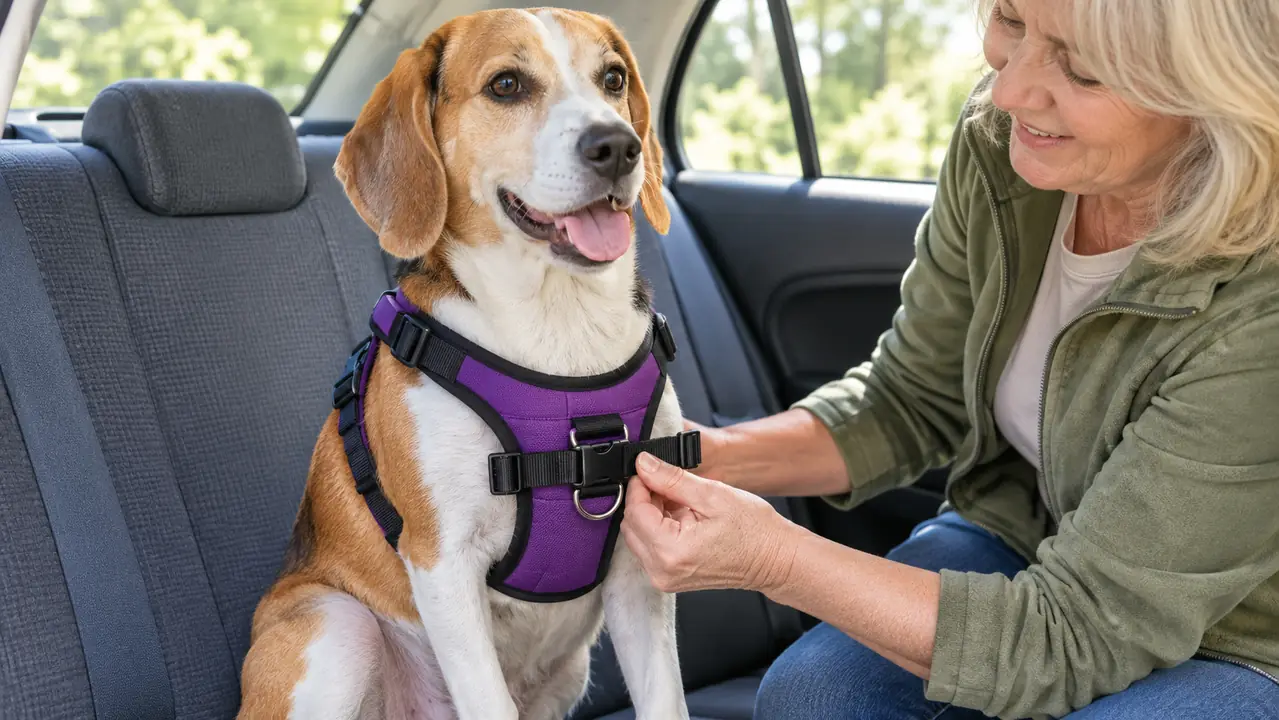
The harness went on Scout for the first time on a cold Saturday in February. I had the size chart on the kitchen table, a tape measure, and a dog who thought the tape measure was a toy. The listing says five adjustment points and steel nested buckles. What that means in a kitchen is that you can move the chest straps, the neck straps, and the belly strap until the harness sits where it should. It took me most of an afternoon, with a break for both of us to calm down. The second fitting took ten minutes. The tenth took two.
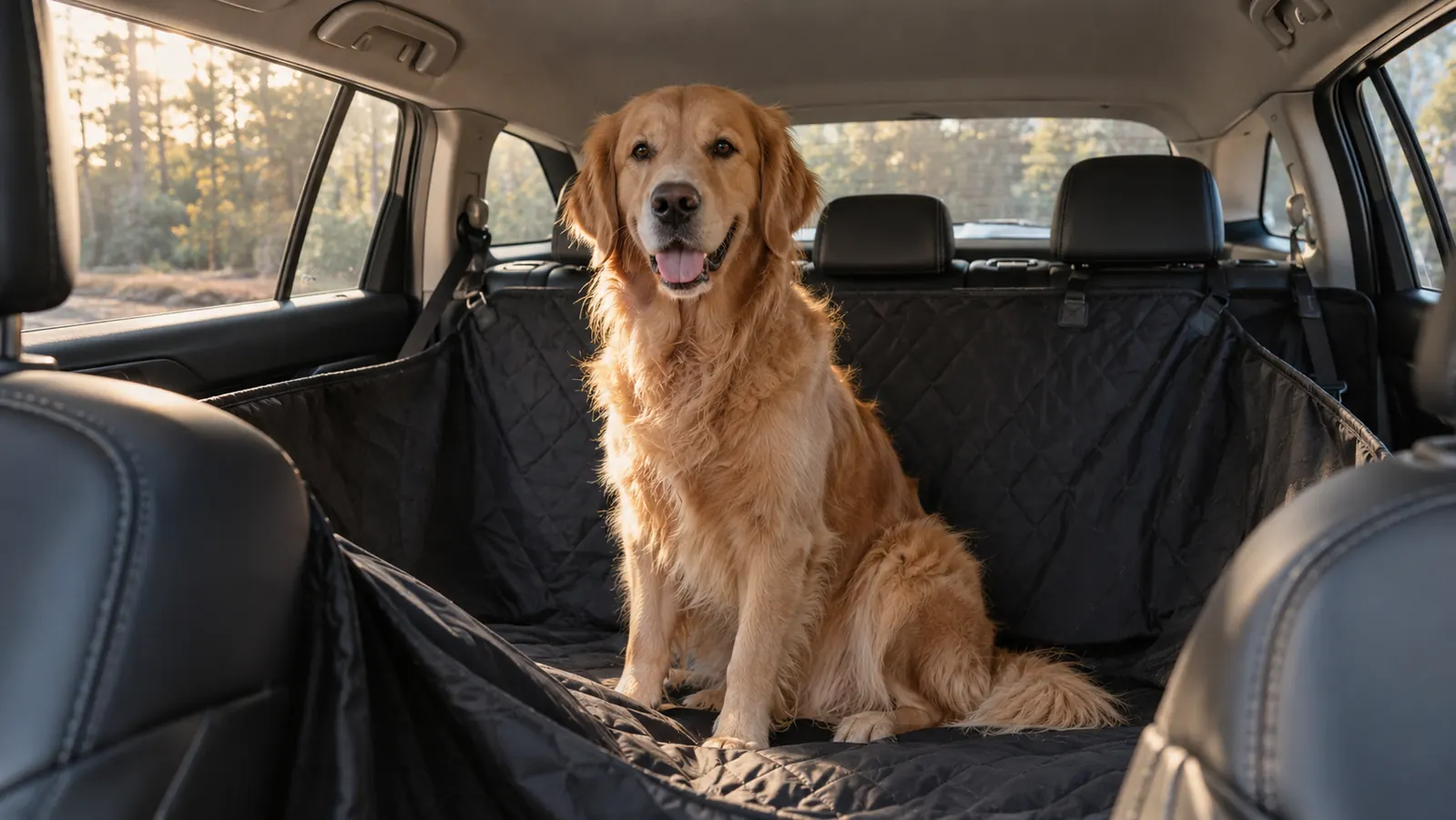
The harness has leash attachments on the back and the front. I use the back attachment when we walk on a loose leash and the front one when I want a little more steering at a rest stop. In the car, she rides on the back seat, rear driver side, on top of the hammock that has been installed since January. The harness is the piece that keeps her from wandering toward the console. The listing describes it as crash tested for dogs up to 75 pounds. Scout is 18 pounds, so she is well inside that range, but I do not treat any harness as a guarantee. I treat it as one part of a calm, restrained ride, with her in the back seat, never the front.
The first real drive was a Tuesday errand run, four stops, maybe twelve miles total. Scout got in, sat on the hammock, and looked at me like I had insulted her. She tried the old move, a slow lean toward the console, and the harness stopped her about six inches short. She gave up and lay down. I have not had a wrestling match in the driveway since. That is the whole review in one paragraph, but the rest of it matters too, so here is the rest.
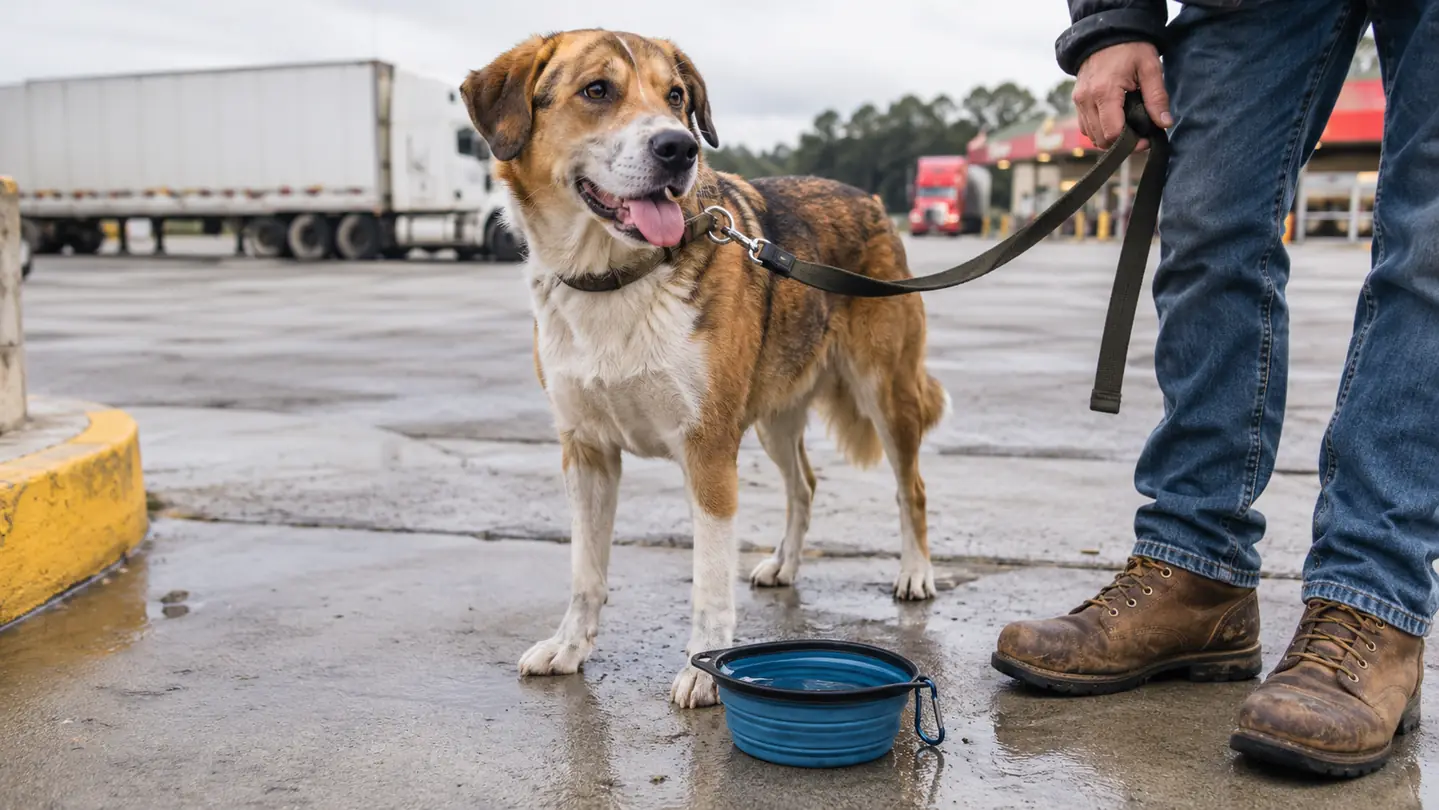
The walking part matters more than I expected. At the Tomah hand-off, I leash Scout and walk her away from the trucks while the next driver takes the transport dog. Having the same harness for the car and the walk means one less piece of gear to juggle. She steps out of the car, I clip the leash to the front attachment, and we go. No swapping harnesses in a parking lot.
How It Fits and Adjusts
Do not guess from weight alone. The listing has a size chart and gives neck and chest ranges. Use a cloth tape around the widest part of the chest, just behind the front legs, and check the chart before you order. The chart is the part that matters. A harness that is too loose will slide, and one that is too tight will rub. The five adjustment points are there to get you out of both problems, but only if you use them.
I measured Scout twice on the same afternoon because the first number looked wrong to me. A cloth tape around the chest, just behind the front legs, gave me one number, and a second pass gave me the same one. I wrote it on the back of an envelope and compared it to the chart on the listing before I ordered. If your dog sits between two sizes, measure again before you decide. The chart is more useful than the weight range alone, and checking it costs you a minute.
The steel nested buckles are heavier than the plastic clips on a walking harness. That weight is the trade for hardware that feels like it will not pop open because the dog leaned the wrong way. I have not had a buckle fail. I have not had a strap slip after I set it. The hand wash only care is the annoying part. A muddy March walk means a bucket of mild soap and water, not the washing machine. I let it air dry on the porch rail.
The first fitting is a two-person job if your dog is a wiggle worm. Dale held Scout while I worked the chest straps. He does not do transport legs, but he can hold a dog for ten minutes. After that, the harness goes on and off like any other walking harness. I check the straps every few weeks, the same way I check the hammock straps. Gear that lives in a car needs a look now and then.
One more fitting note. The harness should sit high on the chest, not down by the elbows. If the front strap cuts across the shoulders, loosen the chest point and tighten the neck point a little at a time. I took a photo of the straps on my phone so I could find the setting again after a wash. That is not in the instructions. It just helped me.
What Nine Months of Use Has Taught Me
The harness has held up. The webbing has not frayed. The buckles still close with a solid click. It has dog hair in the seams and a little dust from the Tomah lot, and it still looks like a working piece of gear. I have not had to replace it. That is not a dramatic result, and I am fine with that. I would rather write about nine months of boring use than one exciting failure.
The daily routine is simple. Scout gets in, sits on the hammock, and waits while I settle her. The harness gives me a handle on the situation without turning every drive into a wrestling match. On transport days, the harness stays on Scout for the hand-off walk. I do not put her in the harness and the carrier at the same time. The Sherpa carrier is for small transport dogs and cats, not for Scout on the same trip.
One transport Saturday in July, the temperature was already in the eighties at nine in the morning. The dog I was carrying that day was a small one, and the hand-off ran long because the next driver was late. Scout and I waited with the hatch up and the shade on that side of the car. She was out of the harness for the wait, on the hammock, with a bowl of water. When the next driver finally pulled in, the harness went back on in under a minute and we walked the dog out. That is what nine months of practice buys you, and it is worth every afternoon I spent fiddling with straps.
The hammock and the harness have to work together. The hammock keeps the seat clean, and the harness keeps the dog in one place. If the hammock is loose, the dog slides, and the harness has to fight the fabric. I snug the hammock straps every few weeks. I check the harness straps at the same time. It takes two minutes in the driveway, not a whole afternoon.
The one thing I would change is the hand washing. It is not hard, but it is one more chore. The other trade is the first fitting. Five points is more adjustment than most people are used to, and if you skip that step, you will blame the harness for a fit problem. Take the twenty minutes. Your dog will thank you by not sliding across the seat.
Where It Works Best
This is a back seat harness. It works best with the dog on the back seat, on a hammock or a cover, with the harness adjusted to the dog's chest. It is not a crate. It does not stop a determined chewer. It does not make a dog safe in every crash. It is one piece of gear in a larger habit: dog in the back, gear checked, driver not distracted. I do not leave Scout alone in the car with it. At parked stops, I stay with her, the hatch up, water in a bowl.
I have also learned where the harness does not belong. It is not a tie-down. I do not clip it to anything in the cargo area, and I do not run a strap through a crate handle. The listing describes how it attaches in the car, and that is what I follow. When the crate is open in the cargo area at a rest stop, it is open while I am standing right there with the hatch up. The crate is a shade and a resting spot. The harness is the restraint. Keeping those two jobs separate has kept both of them simple.
I have used it on errands around Eau Claire, on vet visits, and on the monthly I-94 run. The vet clinic is a short drive, but it is still a drive. The harness goes on in the parking lot, and we walk in. The same harness that kept her on the seat keeps her from backing out of a leash in a busy lot. That double duty is the reason it stays in the car.
What I Compared It To
I saw a plain seat belt tether on another volunteer's dog. I did not own it, and I am not going to pretend I tested it for months. What I noticed was that it left the fit to the dog's walking harness. The Kurgo is a harness and a restraint in one, with the adjustment points built for the job. That mattered to me because Scout's everyday harness was not cut for car travel. The Kurgo gave me one piece of gear to fit once and use both ways.
I also saw a basic bench seat cover in another volunteer's car. It kept the seat clean, but it did not address the dog. The hammock I already had handles the mud and hair. The Kurgo handles the dog. Those are two jobs. I would not buy one and expect it to do the other. If you already have a cover, keep it. Add the harness for the restraint.
What I Liked
- Five adjustment points let you fit a small, narrow-chested dog without rubbing.
- Steel nested buckles feel solid and have not slipped in nine months.
- Works as a walking harness at rest stops, so one piece of gear does two jobs.
- On the back seat, it has kept Scout from wandering toward the console.
Where It Falls Short
- The first fitting took most of an afternoon with a wiggly dog.
- Hand wash only, which is a chore after muddy walks.
- Not a crate and not for a determined chewer or a panicked dog.
The first fitting took an afternoon. The nine months since have taken about ten seconds a trip.
Who This Is For
This is for the owner who drives with a dog in the back seat and wants the dog to stay there without a fight. It is for the person who will take ten minutes to measure and adjust. It is for the volunteer who needs one harness that works in the car and on a leash at a rest stop. It is for the household that wants a piece of gear with steel hardware and a lifetime warranty from the manufacturer when bought from an authorized seller. If that sounds like your setup, the Kurgo Tru-Fit is worth a look.
If you volunteer with a rescue, this is the kind of gear that makes a transport leg easier. You are not just driving your own dog. You are handing a dog to another person in a parking lot, with trucks idling and a leash in your hand. A harness that works in the car and on the walk is one less thing to think about.
Who Should Skip It
Skip it if you want a harness you never adjust. Five points is more than some people want to deal with. Skip it if you want a harness that goes on in one motion and never needs a second look. Skip it if you will not hand wash gear. Skip it if you expect any harness to make a dog safe in every crash. Skip it if your dog is a determined chewer or gets panicked in the car. That is a conversation with your vet or a trainer, not a harness purchase. And skip it if you need a crate. This is a harness, not a crate, and it is not meant to hold a dog in the cargo area.
If you are going to drive with your dog, start with the fit
Measure the chest, check the chart, and set the five points before the first trip. The Kurgo Tru-Fit has been on Scout for nine months of errands, vet visits, and transport Saturdays. If your dog is a chewer or gets panicked in the car, talk to your vet or a trainer first.
Amazon Check the Kurgo Tru-Fit on Amazon →