The first transport dog I ever carried rode in a cardboard carrier that had been sitting in the rescue's storage room since somebody's cat had a vet visit. It was fine for about fifteen miles. Then the bottom started to bow, the dog shifted her weight, and I drove the rest of the way to Tomah with my right hand braced against the side of the box and my left hand on the wheel. That was the last run before the Sherpa, and I have not used a cardboard carrier since. What rides on the passenger side of my back seat now is a Sherpa Original Deluxe, size Large. I bought it myself in April, seven months ago, after the cardboard finally gave out on the way to a hand-off.
I drive one rescue transport leg a month, the second Saturday, ninety miles down I-94 from Eau Claire to a truck stop in Tomah. Most of the dogs on that run are bigger than Scout, my six-year-old terrier mix, so the carrier does not come out every trip. It comes out when there is a small dog under twenty-two pounds on the leg, or a cat, or when Scout has a vet appointment on a Tuesday. Seven months is long enough to know what a carrier does well and where it makes you work. That is what follows.
The Quick Verdict
The spring wire frame is the whole reason this works in a car. It sits level on my back seat, it held up through seven months of transport Saturdays, and the twenty-two pound rating is honest rather than hopeful.
Amazon Check Today's Price →The carrier that fits behind the seat and stays there
Spring wire frame, padded top handle, detachable shoulder strap and liner included. Nineteen by 11.75 by 11.5 inches, three pounds empty. The listing says up to twenty-two pounds, and I would take that number seriously.
Amazon Check Today's Price on Amazon →How I've Used It
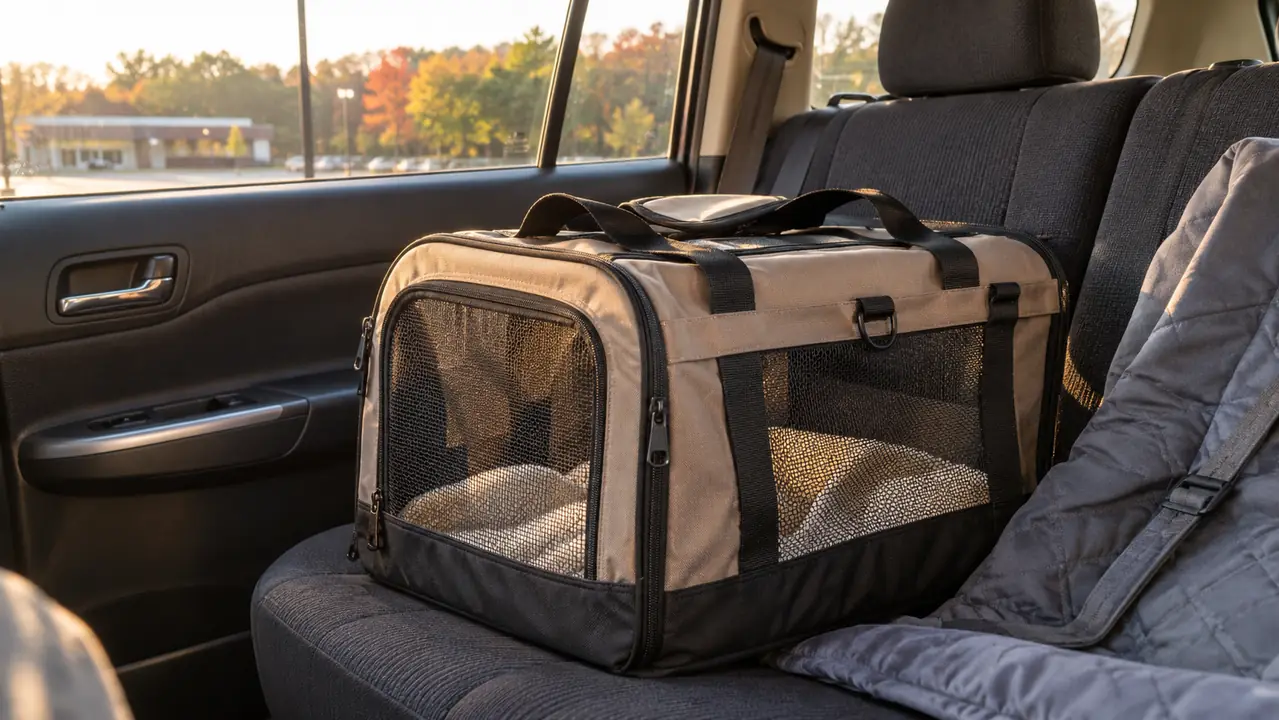
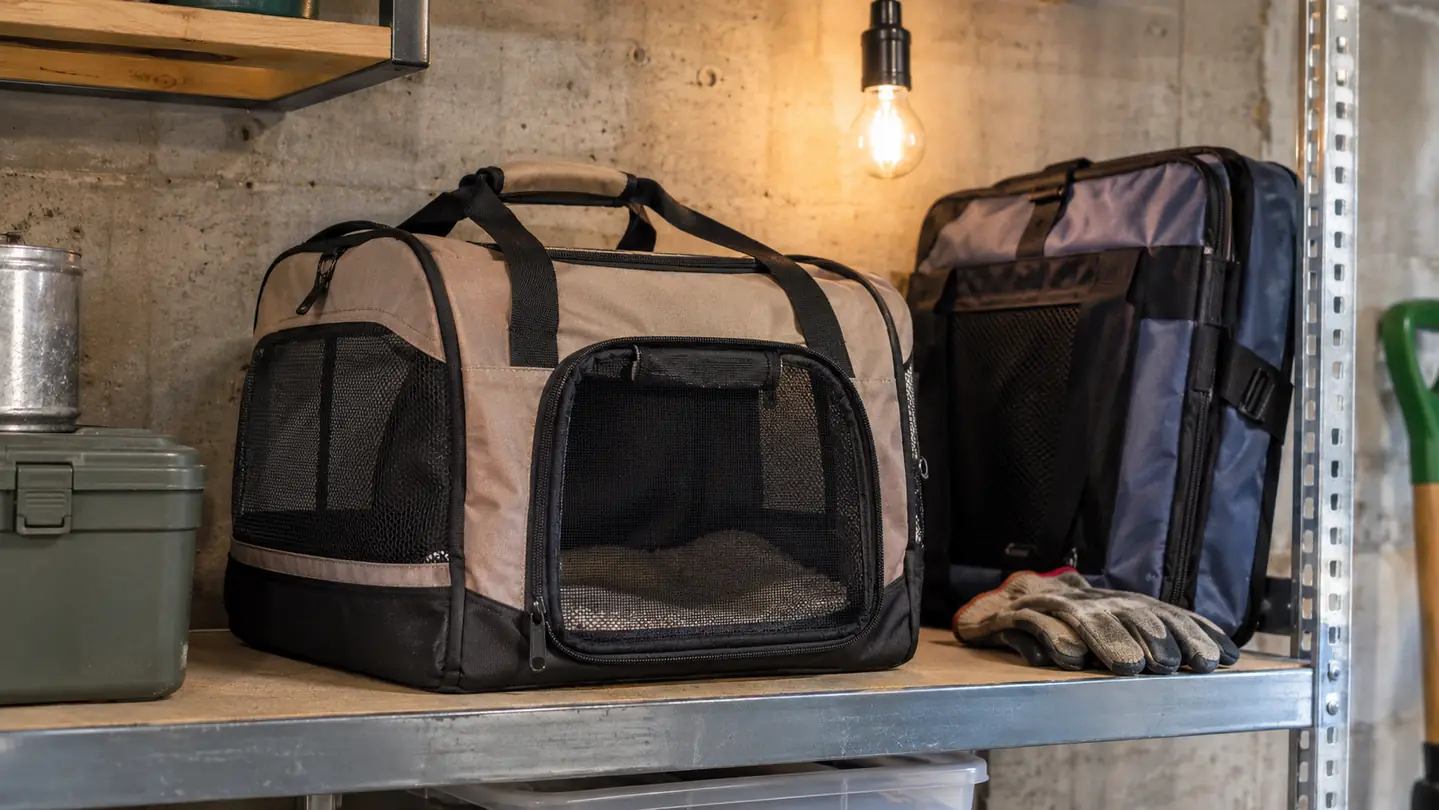
The carrier lives on a shelf in the garage most of the month. On transport Saturday it goes onto the back seat hammock, rear passenger side, with Scout on the driver side wearing her harness and clipped in. Scout is never in the harness and a carrier at the same time. She either rides clipped in on the seat or she rides in the carrier, and at eighteen pounds she is usually clipped in, because she would rather watch the window than sit in a box.
Where it earns its keep is the small dogs. The rescue will hand me a twelve-pound dog at the Eau Claire end and I will put that dog in the Sherpa, set it on the passenger side of the hammock, and the dog will usually settle within the first ten miles. Same story with cats, which I have moved twice. The carrier also does Scout's vet runs, which is not glamorous but is most of its actual mileage. The borrowed cardboard one used to slide around on the seat when I took a corner. This one sits flatter and does not wander.
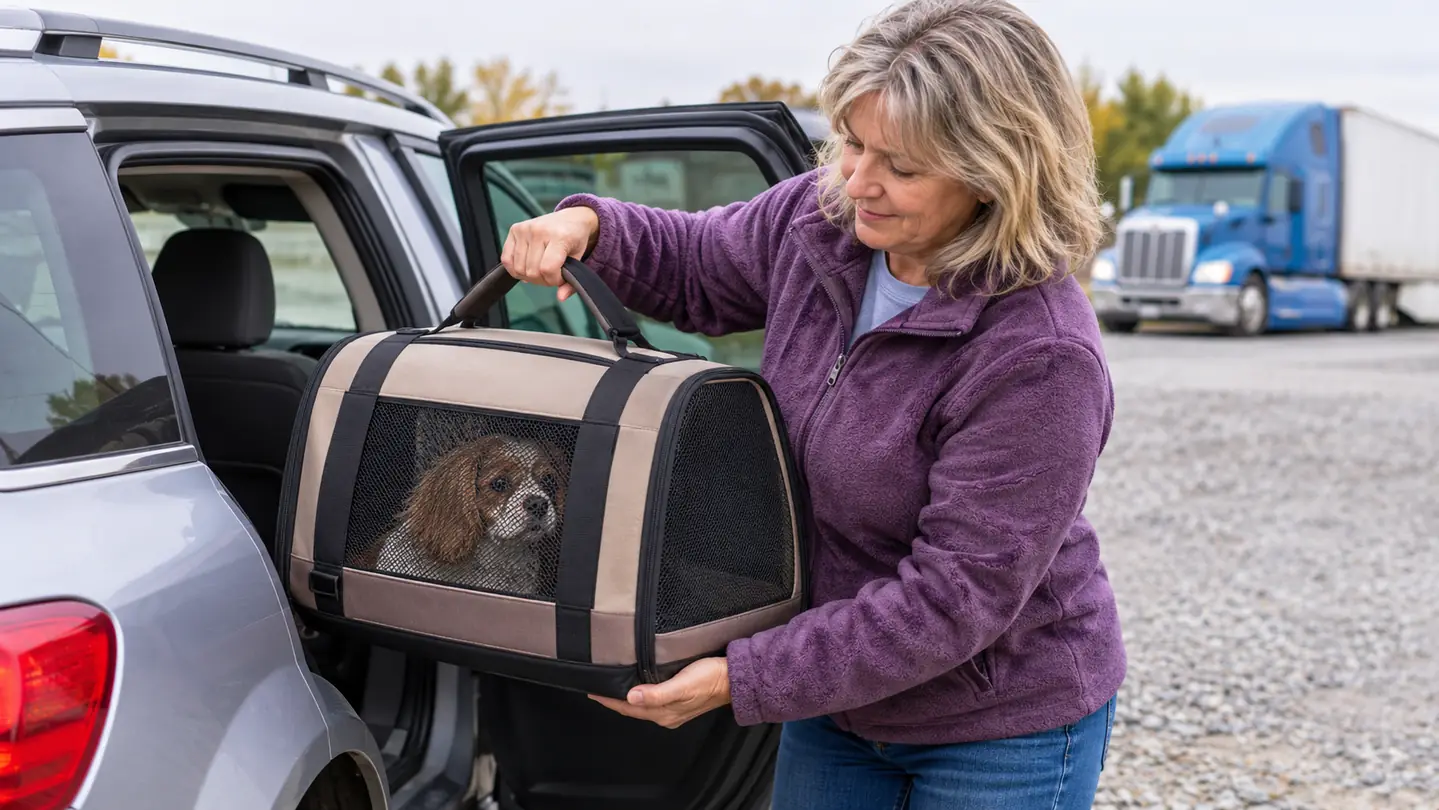
Setup takes about as long as it takes to unzip it. The spring wire frame is already in the shape it needs to be, so there is no assembly and nothing to click into place. I unzip, drop the liner in, put the dog in, zip, and set it on the seat. At the Tomah hand-off I take the whole carrier out and pass it to the next driver, who opens it in her own car. That has happened five or six times now without a problem.
One thing I want to be clear about before anyone reads further: I have never flown with a dog. Not once. So anything I say about airline approval is me reading the listing out loud, not me reporting from a terminal. The flying question comes up later and I will answer it as honestly as I can.
The Spring Wire Frame Is the Whole Reason This Works in a Car
The first bullet on the listing describes a patented spring wire frame that lets the rear end of the carrier be pushed down several inches so it fits in cars. That reads like marketing until you actually do it. My Outback's back seat is not flat, and the space behind the front seat is not generous. Being able to press the back of the carrier down a few inches means it sits level on the hammock instead of leaning against the seat back at an angle.
A rigid carrier cannot do that. I have watched another volunteer wrestle a hard-sided carrier onto her back seat and then wedge it against the door because it would not sit flat. I have never owned a hard-sided carrier, so I am only describing what I saw in a parking lot in Tomah. But I know which one I would rather set down in the dark.
The frame also means the carrier keeps its shape when it is empty and shoved onto a shelf. The all-fabric soft crate I have seen at the rescue folds into itself when there is nothing inside it, so getting it out one-handed means setting everything else down first. The Sherpa holds its box shape whether there is a dog in it or not, which matters more than it sounds like it should when you are carrying a leash, a bowl and a clipboard.
Seven Months In: What Held Up and What Did Not
Seven months and roughly a dozen uses is not a lifetime, but it is more than a first impression. The padded top handle has not flattened out. The detachable shoulder strap still clips on and off cleanly. The zipper has not caught or skipped. The liner comes out and goes back in without a fight, and I have run it through the wash twice and it came out the same size it went in.
What has not held up perfectly is my patience with the shoulder strap. With Scout inside, eighteen pounds of dog plus three pounds of carrier, that strap digs into my shoulder by the time I cross a parking lot. It is fine for the fifty feet from the car to the vet's front door. It is not something I would want to carry a mile, and I say that as someone who spent thirty years around buses.
The listing carries a one-year limited warranty. I have not had a reason to use it and I do not expect to. Nothing on this carrier has broken, torn, popped a stitch or quit working. If that changes I will say so, but seven months in, the wear is on my shoulder, not on the product.
The duller annoyances are the ones worth mentioning. Dog hair works into the seams and needs a lint roller, not a brush. The carrier does not fold flat, so on the shelf it takes up the footprint of a small suitcase. And the liner, while washable, is the part that gets the worst of it, so it comes out more often than the carrier does.
The Twenty-Two Pound Rating Is Honest, Which Means It Is Not Generous
The listing says it fits pets up to twenty-two pounds. Scout is eighteen pounds and she fills it. She can stand up and turn around, but there is not much left over when she does. If I put a twenty-two pound dog in this carrier I would expect that dog to be lying down for the whole ride, and I would expect to be carrying a carrier that weighs twenty-five pounds by the handle.
That is the tradeoff at this size. Nineteen inches long, 11.75 wide, 11.5 tall, three pounds empty. It fits behind a seat, it fits on a back seat next to a dog, and in exchange it is a carrier for small animals. If you have a thirty-pound dog, this is the wrong product, and no amount of remeasuring will fix that.
What I tell people at the truck stop, and I have said it more than once: weigh your dog, then measure your dog nose to tail and floor to shoulder, then set both numbers next to the carrier's numbers. Do not buy for the dog you might have in two years. Buy for the dog standing in front of you.
What a Dozen Hand-Offs Taught Me
A transport leg is not a car trip. It is a relay. I take a dog ninety miles, I hand the dog to another driver, and that driver does the next ninety. The carrier has to survive being picked up, carried across a gravel lot, set down, opened, and handed over, then put back in a different vehicle. Some carriers are built for the back seat and nothing else.
This one handles the hand-off because the padded top handle is where it should be and the whole thing is light enough to carry at arm's length with a dog inside. The three pounds empty matters here. I have watched a volunteer haul a rigid carrier across that lot and she had to stop halfway and switch hands.
The other thing the hand-offs taught me is that a carrier needs to open at the end of the trip and not before. Mine has stayed zipped through every leg. No dog has gotten out in my car, ever, and I intend to keep that record. I check the zipper before I pull out of the lot in Eau Claire and I check it again in Tomah. That is not a knock on this carrier. It is just what you do.
What I Saw at the Rescue, and Why I Did Not Buy It
I looked at a hard-sided carrier before I bought this one. A volunteer had one, and I watched her load it and unload it once. It holds its shape better than anything soft-sided, it wipes clean in about ten seconds, and it does not care what a dog does to the inside of it. I did not buy it because it would not sit flat on my hammock and it weighed more than I wanted to carry with a dog in it. I never owned one, so that is the sum of my experience with it.
I also considered the all-fabric soft crate that sits at the rescue. It is lighter and it folds down to nothing, which is appealing on a garage shelf. But the one I handled had no frame to speak of, and I could not see it holding a nervous twelve-pound dog still for ninety miles. Somebody else's dog, somebody else's car, so take that for what it is worth.
The Sherpa was the middle of the three: soft enough to sit flat on a seat, framed enough to hold its shape, and small enough that I can grab it one-handed on my way out the door. That is the trade I wanted. It is not the trade everyone wants.
What I Liked
- Spring wire frame presses down several inches at the back, so it sits level on a back seat
- Holds its box shape on a shelf between trips and comes out one-handed
- Padded top handle, detachable shoulder strap and liner all still working after seven months
- Twenty-two pound rating is honest, so you can plan around it
- Listing says airline approved and Guaranteed On Board, with a one-year limited warranty
Where It Falls Short
- Scout at eighteen pounds fills it, so a dog near the limit will be lying down the whole ride
- Shoulder strap gets heavy with a dog inside, fine for a parking lot and not much more
- Does not fold flat, so it takes real shelf space
- Dog hair works into the seams and needs a lint roller
Seven months, a dozen transport runs, and the only thing I have had to replace is the cardboard carrier it retired.
Who This Is For
This is for someone with a small dog or a cat who needs a carrier that sits flat in a car and does not eat the whole back seat. It is for the volunteer moving small dogs on a transport leg who needs something that can be handed through a window to the next driver. It is for vet runs, which is most of what a carrier actually does in a normal household. And it is for the person who wants the airline paperwork in order even if they mostly drive, because the listing does say airline approved and Guaranteed On Board.
Who Should Skip It
If your dog is over twenty-two pounds, skip it. If your dog is nineteen or twenty pounds and you want them standing up and turning around for a four-hour drive, skip it and look at something larger. If you want a carrier you can sling over a shoulder and walk a mile with, this will do the job but your shoulder will file a complaint. And if your dog chews, a soft-sided carrier is the wrong category entirely, no matter who made it. I would also say that if you have never weighed your dog, weigh your dog before you order anything.
If your dog is under twenty-two pounds, this is the one on my shelf
Nineteen by 11.75 by 11.5 inches, three pounds empty, spring wire frame, padded handle, strap and liner included. Weigh your dog and measure the chest and length first. Then check today's price.
Amazon Check Today's Price on Amazon →