
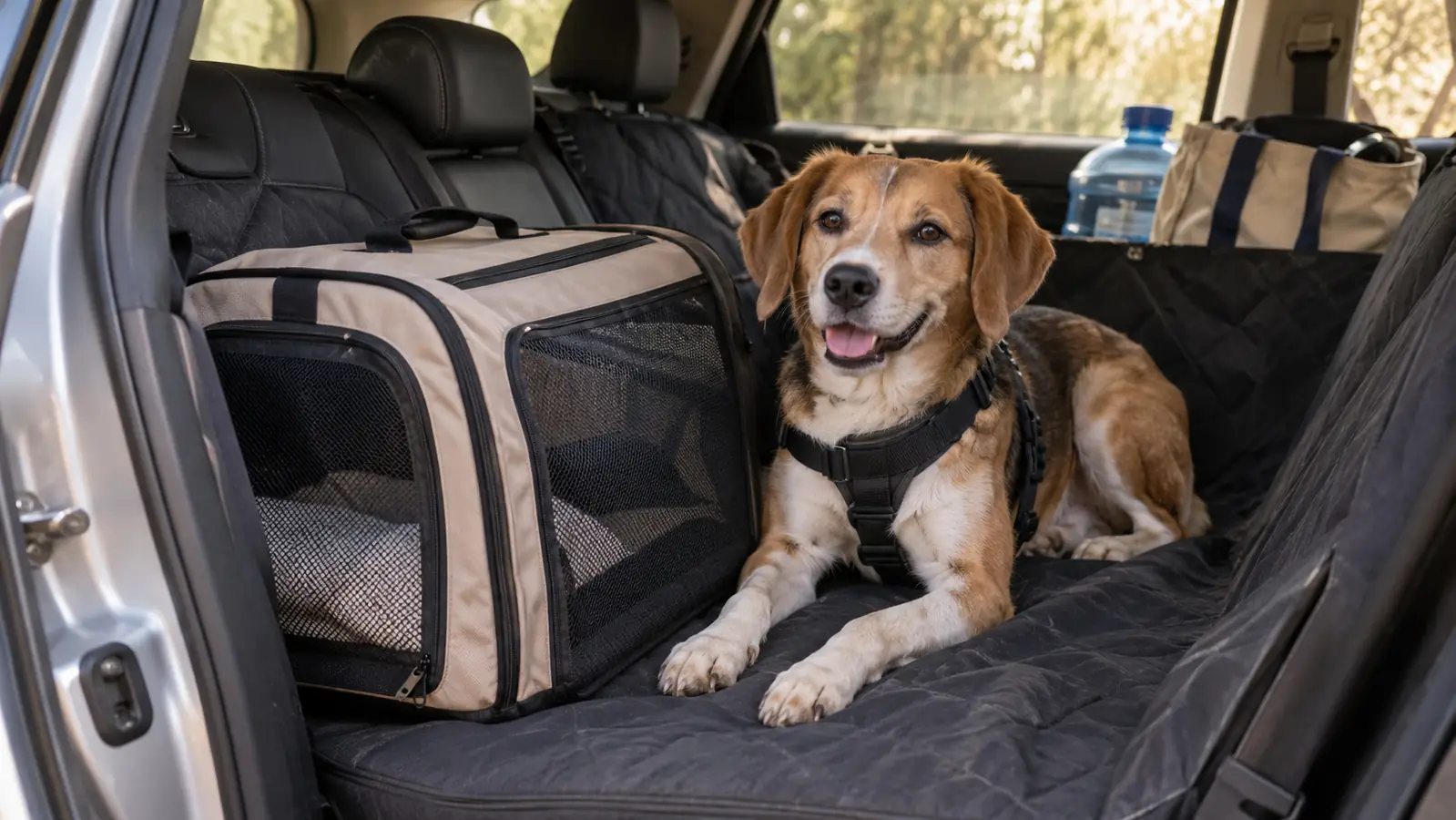
The short answer is the soft-sided one, and I say that as someone who has watched a hard-sided carrier sit on a tailgate for twenty minutes while four people tried to work out where to put it. I bought the Sherpa Original Deluxe in April, seven months ago, in the Large size, for two jobs. One was hauling a small transport dog on my monthly rescue leg. The other was getting Scout to the vet without her climbing over the console. It has done both. The hard-sided carrier is the other kind you see at every hand-off, a molded shell with a door, and it is better at exactly two things.
Both of these are containers. Neither one is a car seat, and neither one is crash tested in my car. If you want a dog restrained in a crash, that is a harness question, and in my Outback the harness clipped to the seat belt is what does that job. This is about the box you carry the dog in, and which box makes a Tuesday vet run and a Saturday transport leg easier. Under 22 pounds and riding in the back seat, that is the Sherpa. A dog that fights the sides of a bag, or a car where you are wiping up after every trip, and the rigid box earns its space.
How They Compare on the Things That Matter
| Sherpa Original Deluxe | Hard-sided carrier | |
|---|---|---|
| Weight, empty | 3 pounds for the whole carrier | Heavier. You feel it carrying a dog across a parking lot |
| Fitting behind a seat | Spring wire frame lets the rear end push down several inches | Holds its full shape, so it needs its full depth |
| Carrying a dog any distance | Padded top handle plus a detachable shoulder strap | One rigid handle, no shoulder strap |
| A dog that throws itself at the sides | Soft sides give when a dog pushes | Rigid shell does not flex |
| Cleaning up after a trip | Liner comes out and washes, fabric still needs to air | Wipe with a paper towel and it is done |
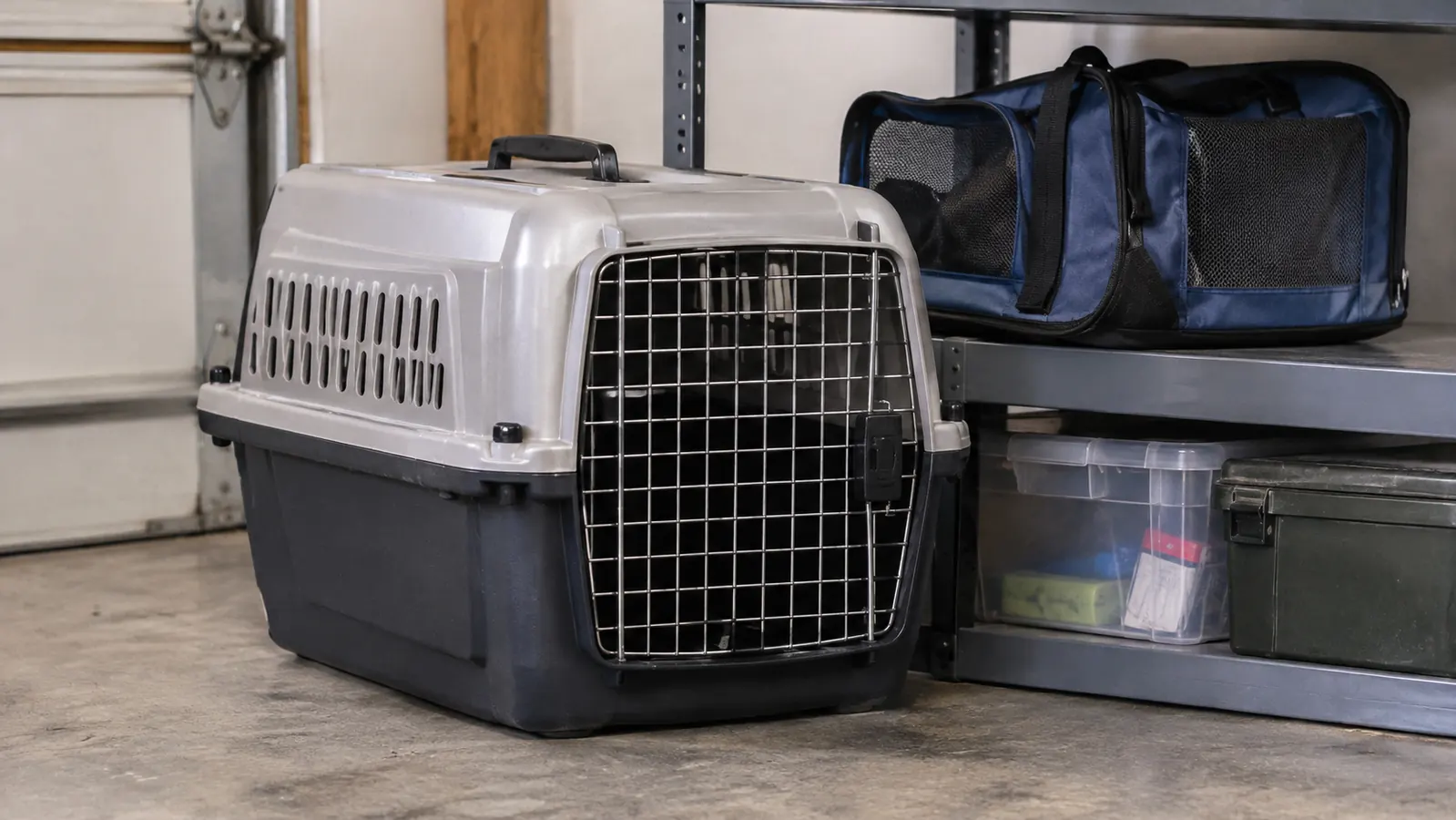
| Storage between trips | Pushes down and fits on a garage shelf | Keeps its footprint wherever you put it |
| Cabin on a flight | Listing says airline approved and guaranteed on board, check with your airline | The one I have seen is a car carrier, not a cabin bag |
| Cargo area of a wagon | Rides on the seat or the hammock, soft bottom | Rigid bottom does not sag under a standing dog |
| Vet waiting room | Dog stays contained and you keep a hand free | Works, but you are holding a box |
| Warranty | One-year limited warranty per the listing | Varies by brand, read it before you pay |
Where the Sherpa Carrier Wins
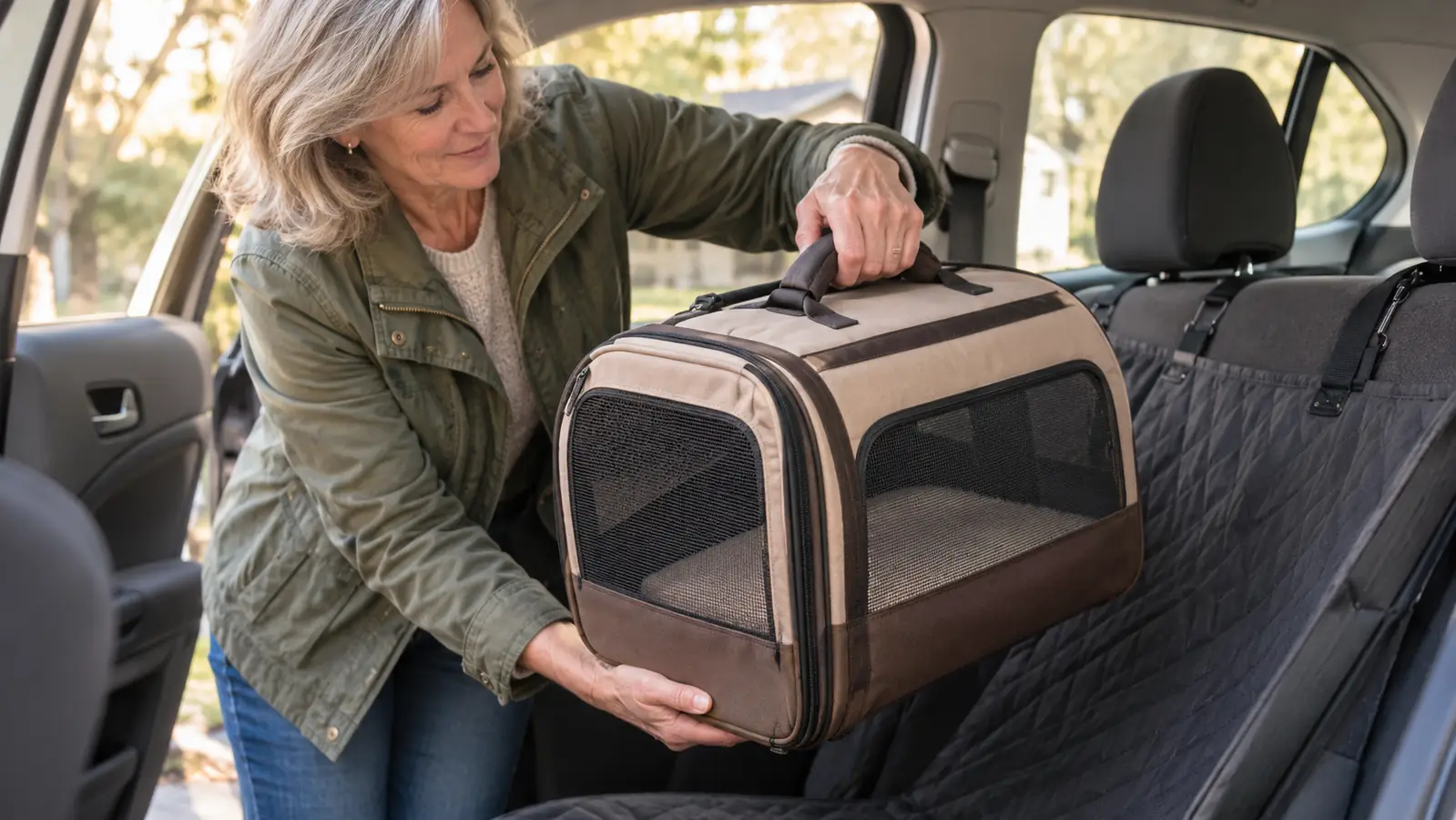
It fits where a car actually has room. The frame is spring wire, and the rear end of the carrier pushes down several inches. That is the whole trick. Behind the passenger seat of the Outback, with the hammock on the seat, I push the back of the carrier down against the seat back and it sits flat instead of perching. A rigid box has to have its full depth. On a back seat that is already carrying a dog and a hammock, those inches are the difference between the carrier riding level and the carrier riding at an angle with a dog sliding into the low corner.
It is three pounds empty and it carries like a bag. Padded top handle, detachable shoulder strap, liner that comes out. I carry it by the handle from the kitchen to the car, and I put the strap over my shoulder at the vet when I need a hand free for the door. With Scout inside, the strap gets heavy fast. She is 18 pounds and she fills the Large. The listing says up to 22 pounds, and I will tell you plainly that an 18 pound terrier mix is about the practical ceiling for a 90 mile leg. A 22 pound dog fits the number, not the carrier.
The vet trip is where it earns its keep for us. Scout gets restless in the car, and on the back seat in her harness she will stand up and sit down and stand up again for the whole twelve minutes. In the carrier she settles. I am not going to tell you why, because I do not know. I set it on the passenger side of the back seat, put nothing through it, and drive. At the clinic I carry her in, set the carrier on the bench, and she waits in it until the vet is ready. That alone is worth the shelf space.
It stores on a shelf. That sounds like a small thing until you have lived with the alternative. The Sherpa goes on the shelf in the garage between trips, next to the water jug and a tote of towels, and it does not eat floor space. The hard-sided carrier at the rescue lives on the bottom of a metal rack and takes the whole footprint of that shelf. In a two-car garage in Eau Claire in February, that is the argument that decides it.
The one that fits behind the seat
Sherpa Original Deluxe, Large, 19 by 11.75 by 11.5 inches, 3 pounds, spring wire frame, padded top handle and a detachable shoulder strap. The listing says it fits pets up to 22 pounds, and mine is tight at 18. Measure your dog and check your airline before you fly.
Amazon Check Today's Price on Amazon →Where the Hard-Sided Carrier Wins
It does not give. I have not owned a hard-sided carrier. The one I know belongs to another volunteer, and I watched her load a dog that did not want to be loaded. That dog threw its weight at the side of the box twice before it settled, and the box did not flex. I am not going to call any carrier escape proof, because nothing is, and a determined dog will work at a door until it finds something. But a rigid shell removes one whole category of problem, which is the side of a bag bowing out while you are at highway speed and trying not to look in the mirror.
It cleans up in a minute. Fabric holds things. The Sherpa has a liner that comes out and washes, and the carrier itself still needs to air out on the porch afterward. A molded shell does not absorb anything. If your dog drools the whole trip or comes back from a wet stop and gets loaded damp, the hard box is a paper towel and two minutes of your life. That is a real advantage and I am not going to pretend otherwise to make my own purchase look smarter.
It sits still in the cargo area. Behind the back seat of a wagon, a rigid box does not sag when a dog stands up inside it, and the bottom does not change shape under a shifting dog. If your dog travels in the cargo area rather than on the back seat, the hard box is the more settled object back there. It is also the easier thing to hand to somebody else at a hand-off, because there is nothing to press down, straighten out, or refasten.
Scout is 18 pounds and she fills the Large. The listing says 22, and I would not put a 22 pound dog in it for a 90 mile leg.
What Seven Months of Transport Saturdays Taught Me
My leg is the second Saturday of the month, about 90 miles down I-94 from Eau Claire to a truck stop in Tomah, where I hand the dog off to the next driver. Scout usually rides along. She is on the hammock on the rear driver side, in her harness, clipped in. The Sherpa rides on the rear passenger side when there is a small dog or a cat aboard, and it stays home when there is not. That is the whole system, and it has not changed since April.
What changed is how I load it. The first month I set the carrier on the seat and let it land where it landed. It slid. Now I push the rear of it down against the seat back first, set it down, and check that the bottom is flat before anything goes inside. Takes ten seconds. The other thing I learned is to put the liner in before the dog, not after, which sounds obvious until you are standing in a truck stop parking lot with a cat in one arm and a carrier in the other.
At the hand-off the dog comes out of the carrier, goes into the next driver's setup, and the carrier goes back on the seat. That is the moment a shoulder strap stops mattering and a handle matters. I carry it back to the car by the padded handle with one hand and keep the leash in the other. On a windy day in a truck stop lot, with semis idling, that is the entire job, and the carrier that makes it boring is the one you want.
The Things I Would Check Before Buying Either One
Measure the dog, not the label. The Large is 19 by 11.75 by 11.5 inches, and the listing says it fits pets up to 22 pounds, but weight is the wrong number to shop by. A long dog and a tall dog of the same weight do not fit the same box. Measure from the base of the tail to the front of the chest, add a couple of inches, and measure the height at the shoulder. Then compare that to the inside of the carrier, not the outside, because the frame and the padding eat some of it.
Check your airline, not a blog. The listing says airline approved and guaranteed on board. That is the listing talking, not me. I have never flown with a dog, so I have nothing to add from experience, and airline rules change. Call your airline with the carrier's dimensions in front of you and get the answer in writing. The same advice goes the other direction. Most hard-sided carriers are car carriers, not cabin carriers, and the one I have seen at the rescue would never go under a seat.
And neither one goes in the front seat. Neither one gets left in a parked car, not for five minutes, not with the windows cracked. That is not a carrier question. I would rather say it out loud every time than assume somebody already knows.
Who Should Buy Which
Buy the Sherpa if your dog is under about 20 pounds in real life, rides in the back seat, and you want something that goes from the garage shelf to the car to the vet door without a wrestling match. Buy it if you drive transport legs and need a contained spot for a small dog or a cat on the passenger side. Buy it if you carry the dog any distance at all, because the padded handle and the shoulder strap are the difference between one trip from the parking lot and two.
Buy the hard-sided carrier if your dog throws itself at the sides of a bag, if you are tired of washing fabric, or if the carrier lives in the cargo area and never comes into the house. Buy it if your dog is over 22 pounds and you are not flying, because at that size the Sherpa is out of the running anyway. The one reason I would not buy it is because it looks safer. It does look safer. That is not the same thing as being safer, and neither of these is a crash tested restraint.
If your dog rides in the back seat, this is the box that gets used
The Sherpa goes from the garage shelf to the back seat to the vet door without a fight. Under 22 pounds, back seat, harness on the dog, carrier on the passenger side. That is the whole recommendation.
Amazon Check Today's Price on Amazon →Scout is six, and she has a few more vet trips in her whether she likes it or not. The carrier that gets her there without a fight is the one that stays on the shelf in the garage. That is the whole test, and it is the only one that has ever mattered to me.