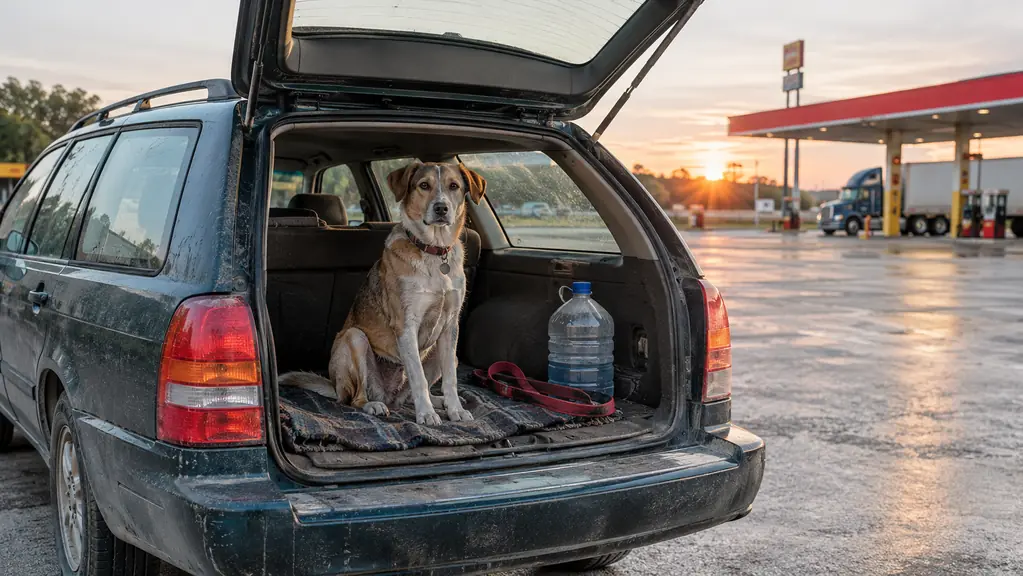
For five years I have driven one rescue transport leg a month. I am Gail Brandvold, 58, retired school bus dispatcher in Eau Claire, Wisconsin. On the second Saturday I take a small Wisconsin rescue dog about 90 miles down I-94 to a truck stop in Tomah and hand the leash to the next driver. Scout, my 6-year-old terrier mix, usually rides along. She rides in a Kurgo Tru-Fit Smart Harness now. Before that she rode loose on the back seat of my Subaru Outback, and that was the problem.
Not a dramatic problem. A low-grade one. Scout would start on the rear driver side, wander toward the console, put a paw on it, and look at me like she had a question. I would take one hand off the wheel to guide her back. Do that a few times on I-94 and you start to feel dumb. A towel on the seat did not help. A blanket did not help. A stern voice did not help. I wanted my dog to stay in one place, and I wanted to stop driving with one hand.
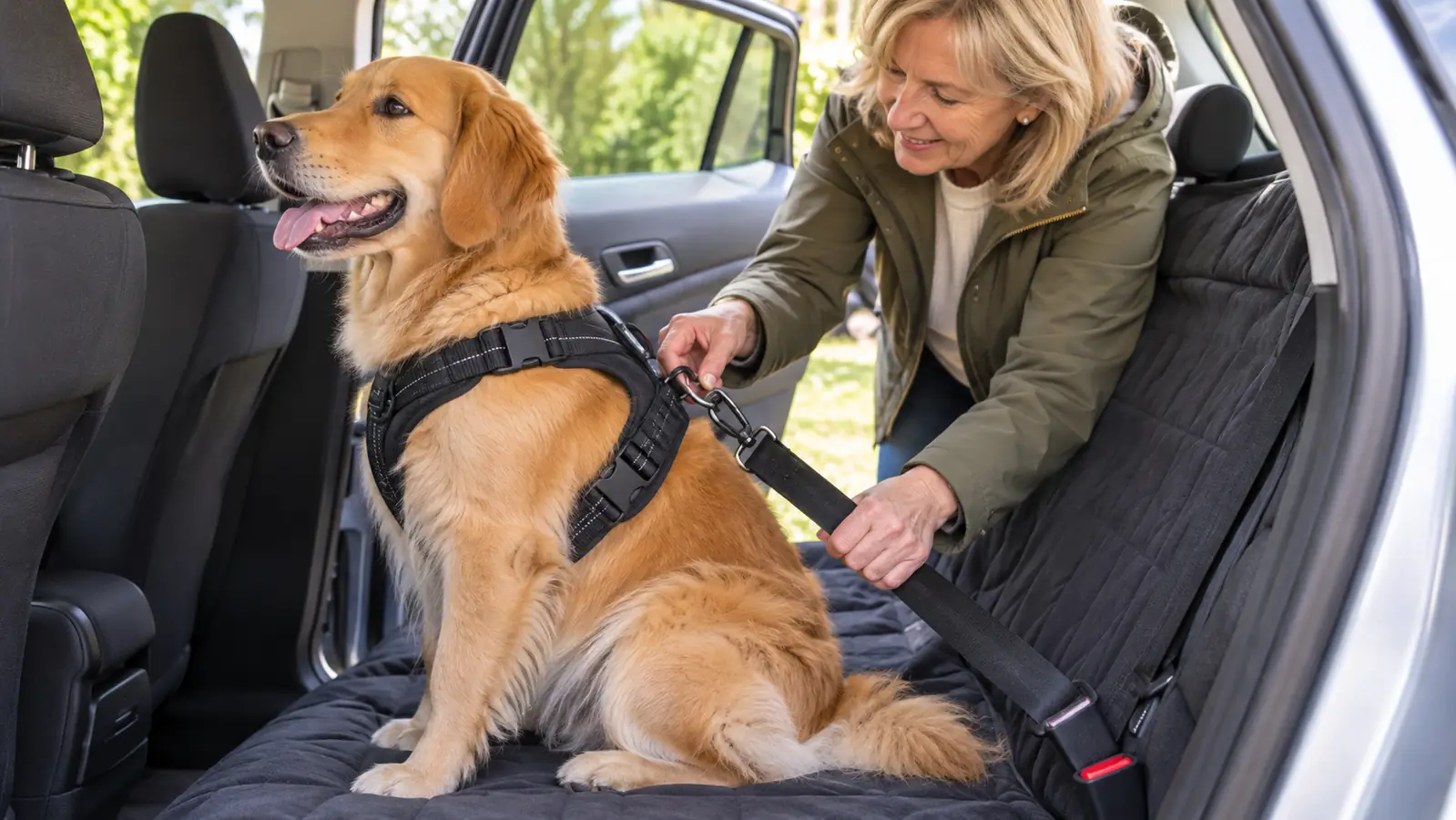
In the second week of February, nine months ago, I bought the Kurgo harness with my own money on Amazon. It is the second of five things I have bought for this setup, one at a time. The listing says steel nested buckles, five adjustment points, leash attachments on the front and back, and hand washing only. It also says crash tested for dogs up to 75 pounds. I am not going to call any harness crash proof. I have never been in a crash with a dog aboard and I do not plan to start. What I can tell you is that it holds Scout where I put her, and that is the job I bought it for.
The first fitting took a while. Five adjustment points is not a bad thing, but it is not a two-minute thing either. Measure the chest, not the weight. The size chart asks for a chest measurement, and that is what I used. Do not guess from the breed or from what your dog weighs. Put the harness on in the driveway, adjust one strap at a time, and take the dog for a short walk before you trust it in the car. I fitted it on a Saturday morning with Scout on the tailgate and a cloth tape in my coat pocket. It took me three tries to get the front and back straps even. That is normal, not a defect.
The first drive was the test. Scout rides on the back seat, rear driver side, on a back seat hammock. I put the harness on her, clipped her in with the seat belt, and pulled out of the driveway. She could sit, stand, turn around, and lie down. She could not climb onto the console. After about a mile she lay down and stayed there. I do not think she had a conversion experience. I think she figured out that the seat was where she was going to be, and she made peace with it. That is all I wanted.
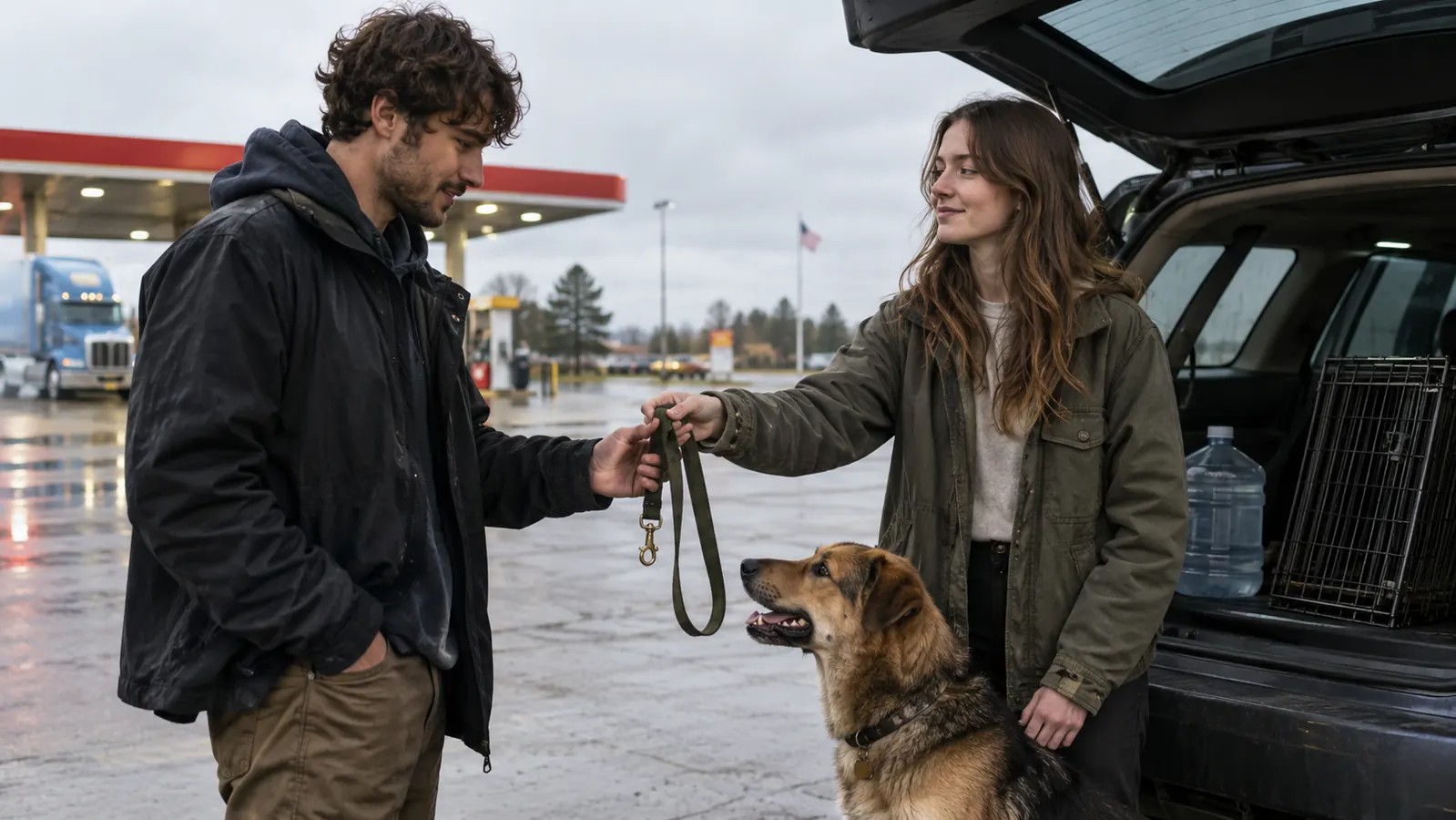
Transport day is where it earns its keep. At the Tomah hand-off I park, open the back door, and clip a leash to the harness. The front ring is the one I use when Scout is likely to pull. The back ring is the one I use for a normal walk. I hand off the transport dog, water both dogs from a collapsible bowl, and put Scout back in the car. The harness stays on for the drive home. It is not a crate, and it is not a seat belt for a dog who panics. It is a fitted harness that keeps a calm dog in one spot. That is a smaller claim than some ads make, and it is the one I can stand behind.
The change was not that Scout became a different dog. The change was that I stopped driving with one hand on the wheel and one hand on her.
The harness that keeps a wandering dog in one place
The Kurgo Tru-Fit Smart Harness has steel nested buckles, five adjustment points, and leash attachments on the front and back. Measure the chest against the size chart before you order.
Amazon Check Today's Price on Amazon →Nine months in, the harness is still in the car. It has been washed by hand more than once, because hand wash only is what the listing says, and that is a chore. It comes off, gets rinsed in the laundry sink, and goes back on the line in the garage. The five adjustment points have not slipped. The buckles have not jammed. Scout has not chewed it, because Scout is not a chewer. If you have a chewer, that is a different conversation, and I would not leave any harness on a dog who is going to work at the straps.
I have seen a plain seat belt tether on another volunteer's dog. I have not owned one, so I am not going to tell you it is no good. I can tell you why I went with the Kurgo instead. The tether was one strap and one clip. The harness is fitted to the dog at five points, so the pressure is spread across the chest and shoulders instead of one spot. For a dog who wears it for a 90-mile leg and then a walk at a truck stop, that mattered to me.
I have also seen a hard-sided carrier at the rescue. I have not owned one, and I would not put an 18-pound terrier in one for a long drive unless she was already used to it. Scout is not. She rides in the harness, on the back seat, never in the front seat. That is a rule in my car and it should be a rule in yours. A dog in the front seat is a dog in the airbag zone.
What I would not do is treat the harness as a babysitter. It does not make a frightened dog calm. It does not make a car sick dog stop getting sick. If your dog panics, drools, or gets sick in the car, call your vet. That is a health conversation, not a gear conversation. The harness is for a dog who is physically able to ride and needs to stay in one place. Scout fits that description. Not every dog does.
What I'd Tell You If We Were Sitting at My Kitchen Table
I would tell you to measure the chest with a cloth tape and order from the size chart, not from the weight range and not from the breed. I would tell you to fit it in the driveway, one strap at a time, and to take a short walk before you clip it to a seat belt. I would tell you to put the dog in the back seat, never the front, and never to leave a dog alone in a parked car. I would tell you that hand washing is a chore and that five adjustment points take a first fitting. And I would tell you that none of that is a reason to keep driving with a dog wandering toward the console.
The Kurgo Tru-Fit did what I bought it to do. Scout stays on her side of the back seat. I keep both hands on the wheel. At the Tomah hand-off I clip a leash to the front ring, walk her once around the lot, and put her back in. Nine months of second Saturdays and vet trips and hardware store runs, and the only thing I would change is that I did not buy it sooner. If you are hauling a dog who treats the console like a suggestion, start with the chest measurement and go from there.
Stop driving with one hand on the dog
The Kurgo Tru-Fit Smart Harness is built for the back seat and for the walk at the stop. Check the size chart, fit it in the driveway, and keep the dog behind you.
Amazon See the Kurgo Tru-Fit on Amazon →