Here is the part of the Kurgo Tru-Fit that does not show up in the listing photos. The first fitting took me forty minutes on my kitchen floor, and I said a few things to a nylon strap that I would not repeat in church. Nine months later I would buy it again. Both of those statements are true, and the order they come in matters. This is the honest version, including the parts that made me set the harness down and go make a cup of coffee before I tried again.
I am not a gear reviewer. I am a retired school bus dispatcher in Eau Claire, Wisconsin, and for five years I have driven one rescue transport leg a month, ninety miles down I-94 to a truck stop in Tomah, where I hand dogs to the next driver. My dog Scout is a six year old terrier mix, eighteen pounds, adopted from that same small Wisconsin rescue. She gets restless in the car. Before February she rode loose on the back seat of my Outback and kept drifting toward the console, which is the kind of thing that ends badly at highway speed. I bought the Kurgo Tru-Fit in the second week of February with my own money. Nobody sent it to me, and nobody asked for this review.
The Quick Verdict
Sturdy, honest hardware that holds a restless dog in place on the back seat and doubles as her walking harness at highway stops. Budget a slow first fitting, a hand wash that does not dry overnight, and a chest measurement taken with a soft tape rather than guessed from the weight range.
Amazon Check Today's Price →The straps have not moved since the day I got them right
Five adjustment points, all steel nested buckles, leash attachments on the front and the back, and a listing that says crash tested for dogs up to 75 pounds. Nine months of transport Saturdays and nothing has loosened, frayed or failed.
Amazon Check Today's Price on Amazon →How I've Used It
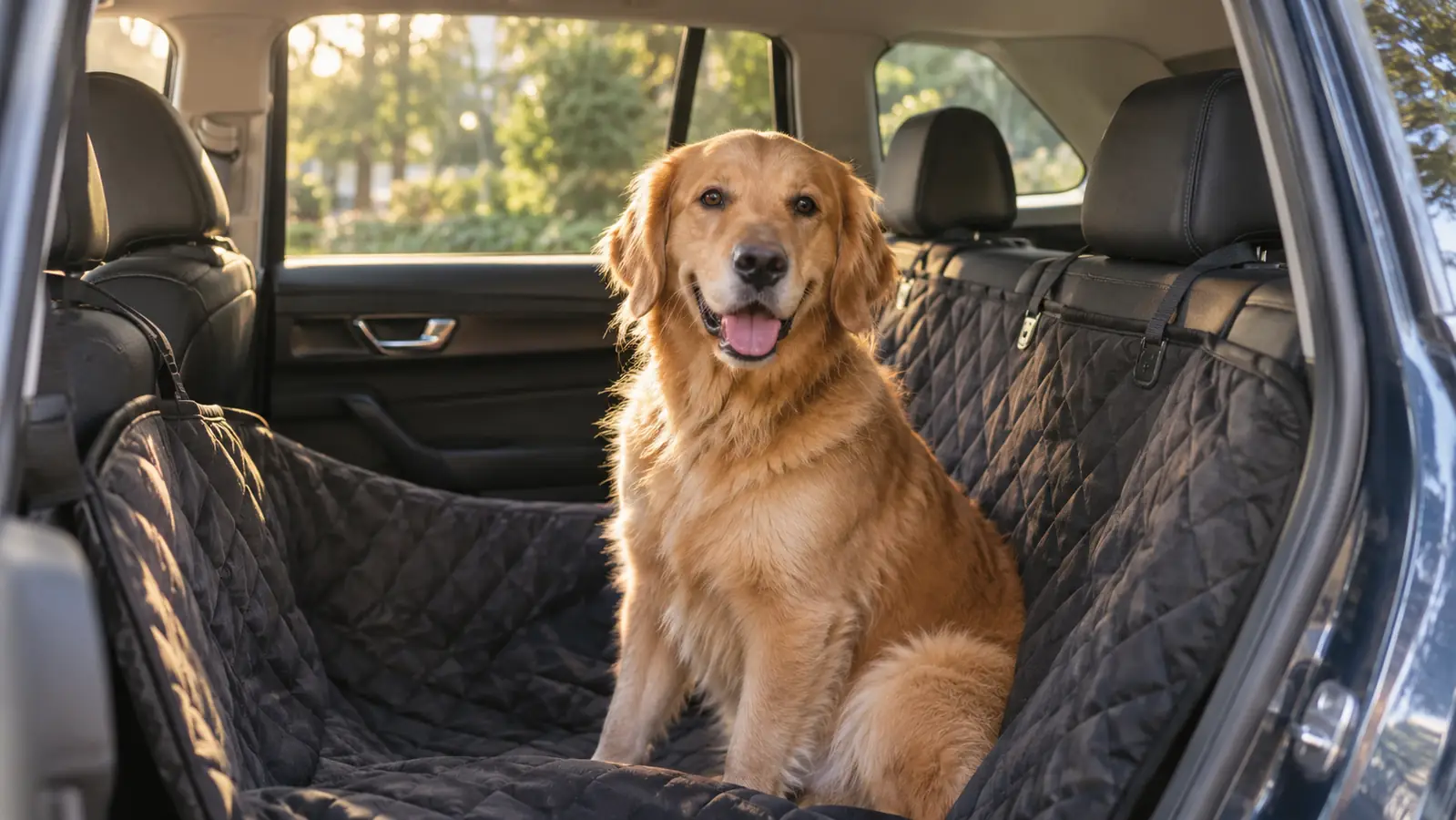
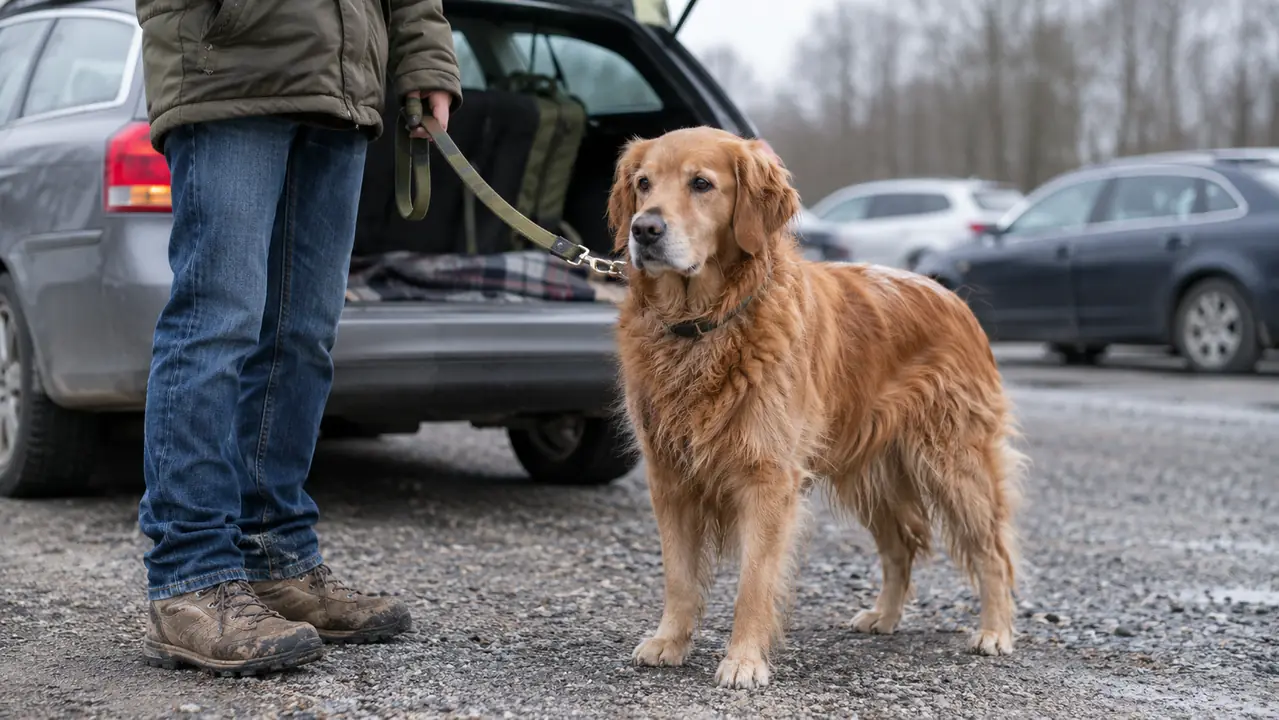
The harness got bought for one job and ended up doing two. The car job is obvious. Scout wears it on the back seat, clipped in, on the hammock, rear driver side, every trip. The second job I did not plan for. It turns out to be a perfectly good walking harness. At the Tomah hand off I am out of the car with Scout on a leash, standing in a gravel lot, waiting for a truck that is always eight minutes later than the text message said. Having one piece of gear that does both means I am not wrestling a second harness on and off a dog in a parking lot in February wind.
In nine months it has been on her for nine transport Saturdays, a vet visit in April, a vet visit in August, and more short drives around Eau Claire than I could count if I tried. The strap settings have not moved. That sounds like a small thing until you have owned a harness that loosens a notch a week and finishes every walk with the chest piece riding up under the dog's chin. This one holds where you put it.
There was one Saturday in November that I think about when I recommend this thing. Freezing rain east of Menomonie, the kind that turns a windshield into a sheet of grey, and I had a small transport puppy in the carrier on the passenger side and Scout harnessed on the driver side. The puppy whined for thirty miles. Scout sat still as a stone. That was the first time I understood the difference between a dog loose on a seat and a dog with somewhere to be. I made Tomah on time, handed the puppy to the next driver, and drove home at forty five miles an hour the whole way.
What I have not done is crash with it. Nobody should read this as a test, and I would ask you not to. I have never been in a collision with a dog in the car and I intend to keep that sentence true. Kurgo's crash testing is what the listing says it is, and the listing is where that claim belongs. My experience is with fit, wear, and whether a restless terrier will tolerate the thing for ninety miles. That is a different question and it is the only one I can actually answer.
One more piece of context, because it changes how the harness behaves in real life. Scout rides on a back seat hammock that stays in the car all year. Before that I was using old bath towels, which slid out from under her every time I braked. The hammock gives the harness a flat surface to sit on. A harness cannot fix a dog sliding on bare leather, so if your back seat is uncovered, plan on both.
Five Adjustment Points, and Why That Cuts Both Ways
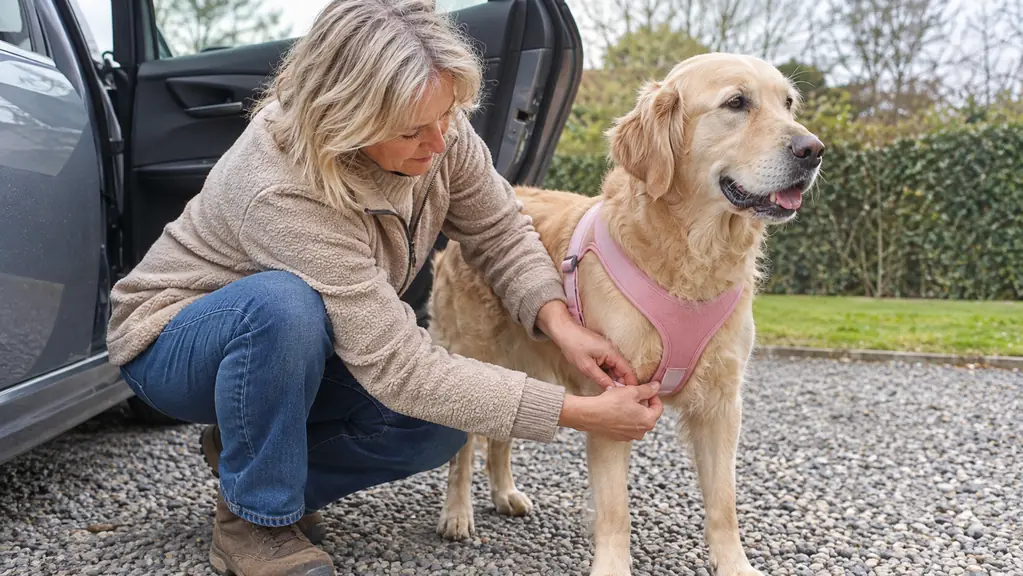
Five adjustment points is the number, and it is the number that made my first fitting miserable and also the reason nothing has slipped since. Each strap does something different. Get all five roughly right and the harness sits where it should across the chest and behind the front legs. Get two of them wrong and you have a strap digging into a shoulder, which is how a decent product collects angry reviews from people who never got the fit sorted out.
The first thing I did was guess. I set the harness to what looked about right on the kitchen counter, put it on Scout in the driveway, and called it done. It rode up. Every time she turned her head the chest piece slid toward her throat, and every time she sat down the strap behind her front legs slid forward. I did that for a week before I admitted the counter is not a dog. That is the rookie mistake with any harness that has more than three adjustment points, and I made it in full.
The way I did it the second time was slow and I recommend it. Put the harness on with the straps loose. Walk the dog around the yard. Then tighten one strap at a time with the dog standing square, and check under the chest and behind the front legs with two fingers. If I could not slide two fingers flat under a strap, it went back a notch. Forty minutes the first time. The refit after a wash in the utility sink took six minutes because I knew what I was doing. That ratio is the whole story of this harness.
All steel nested buckles are what the listing calls the hardware, and they are the part I notice most. They are heavier than the plastic side release clips on most walking harnesses, and they take a firm squeeze with older hands. I have a cranky right thumb and I can still work them, but I want to be straight with you that they are not one finger quick. What they are is still clicking the same way in November as they did in February, which is more than I can say for the plastic clips on gear I have owned before.
Leash attachments on the front and the back is the other listed feature, and it is the one that makes the double duty work. In the car, the back attachment is the one that faces the seat belt, whatever tether you are using. On foot, I use the front ring when Scout is being a terrier about a squirrel and the back ring when we are just walking. Two rings, one harness, and no fumbling at the car door with a leash in my teeth.
What Nine Months of Transport Saturdays Did to It
Nothing broke. I want to say that plainly, because nine months of anything is where cheap gear shows itself. The stitching at the shoulder joints has not opened. The webbing has not frayed at the adjustment points, which is where it will fray first if it is going to fray at all. The buckles snap home. Nothing has been returned, replaced, or quietly retired to a shelf in the garage next to the things that did not work out.
What has changed is the stiffness. The webbing has softened in the way a good leather glove softens, and the harness now folds into the passenger door pocket instead of standing up on its own. In February Scout walked like she was wearing a piece of furniture. By April she was trotting to the car door when I picked it up off the hook. That is the only review from a dog I can honestly read, and it is a good one.
The wash is the chore, and I will not pretend otherwise. Hand wash only is what the care instructions say and they mean it. It goes into the utility sink with a little dish soap after a muddy transport day, I work the straps with my hands, rinse it, and hang it over the laundry tub overnight. Do not put it in the machine on a Friday night and assume it will be dry by nine the next morning. Give it longer than that, because a damp harness on a cold back seat is a sad start to a transport leg.
The worst day the harness has had was a wet Saturday in October, south of Osseo, where the gravel lot at the hand off had turned into a shallow lake. Scout went through it at a dead run before I could shorten the leash. I rinsed the harness in the utility sink when I got home and it hung over the tub until Sunday afternoon. It came back soft rather than stiff, and the webbing did not hold a smell. That is a low bar, I know, but it is the bar that separates gear you keep from gear you stop using.
What I Liked
- Five adjustment points actually hold a setting. I have not moved a strap since February.
- All steel nested buckles and hardware, still snapping cleanly after nine months of monthly use.
- Leash attachments front and back let one harness do the car job and the walking job.
- No swapping gear in a gravel lot at a hand off, which matters more than it sounds.
- The listing says crash tested for dogs up to 75 pounds.
- The listing also states a lifetime warranty when bought from an authorized seller.
Where It Falls Short
- The first fitting took forty minutes and a second pair of hands would have helped.
- Hand wash only, and it does not dry overnight.
- The steel buckles take a firm squeeze, which matters if your hands are not what they were.
- The weight range on the size chart is a starting point, not an answer. Measure the chest.
- The harness does not include a tether of its own. That is separate, and the back ring is the one it reaches.
Nine months, nine transport Saturdays, and the buckles still snap the way they did in February. The straps have not moved since the day I finally got them right.
The Sizing Conversation Nobody Has
Here is what I would tell anyone standing in my driveway with this page open on a phone. Do not use the weight range as your only input. The listing gives a weight range and gives chest and neck measurements for the size it describes, and the chest tape is the number that decides whether the dog is comfortable or miserable. Run a soft tape around the widest part of the chest, right behind the front legs, and write the number down before you order anything. If you land between two sizes, go up and use the five adjustment points to take up the slack.
I measured Scout twice, once on the kitchen floor and once at the vet in April, and got the same number both times, which told me the tape was in the right place. If you get two different numbers, either the tape is not level or the dog is not standing square. Do it on a hard floor. A dog standing on carpet with her feet half sunk in is not the dog you are measuring.
The one thing I will not do is tell you what size Scout wears. She is eighteen pounds and shaped like a fire hydrant with opinions, and what fits her will not automatically fit your eighteen pound dog. Dog shape varies more than a size chart can cover, which is exactly why the chart has two measurements on it instead of one. Measure, then order, then fit it slowly in the driveway with the tags still on in case it has to go back.
Also worth saying out loud, because it is easy to skim past. The harness is crash tested for dogs up to 75 pounds, and that is the ceiling the listing claims. A dog over that is outside what the product promises, and a bigger dog needs a different conversation. I would rather you read that here than find it out after the box is open.
The Front Clip, the Back Clip, and What Each Is For
The front attachment is a steering aid, not a brake. If a dog lunges, a leash on the front ring turns her shoulder and she ends up facing you instead of facing the thing she wanted. It works, and it works without pulling on her throat. The back attachment is the ordinary walking ring and the one I would use for a calm dog or for the car. Knowing which ring is which before you are standing in a gravel lot with a dog and an arriving truck is worth ten minutes of practice in your own driveway.
My one caution is the obvious one. A harness is a restraint, not a guarantee, and no harness on the market is escape proof. A determined terrier who wants out of something will find the way out, and my job is not to put her in a position where she gets to try. She rides in the back seat, never the front, and never alone in a parked car. That is not a product feature. It is just how it goes.
Who This Is For
This harness suits the person I was in January. You have a dog who will not settle on the back seat, you already run a cover or a hammock, and you want one piece of gear that handles the drive and the walk. It suits rescue volunteers doing transport legs, because a hand off is faster when you are not changing harnesses in a parking lot with a stranger holding a clipboard. It suits anyone whose dog is strong enough to matter and patient enough to stand still for a slow first fitting. And it suits people who keep gear a long time. Nine months in, this one looks like it has years left in it.
Who Should Skip It
Skip it if you want to clip something on in ten seconds and drive. That is a plain seat belt tether, and I have watched another volunteer use one on her dog at the Tomah hand off. It is simpler, there is nothing to fit, and for a calm dog it may be all you need. Skip it if hand washing a harness sounds like a chore you will not actually do, because a dirty harness against a dog's coat for months is worse than no harness at all. Skip it if your dog is over 75 pounds, or if you cannot get a chest measurement without a wrestling match. And skip it if what you really want is a carrier, because this is a harness. Scout still rides in hers for vet trips on days she is not up to the seat.
Forty minutes once, then it is just the car
Nine months, nine transport Saturdays, one harness, no failures and no loosened straps. If your dog is under 75 pounds and you will spend the time getting five straps right, this is the one I would buy again. Measure the chest before you pick a size.
Amazon Check Today's Price on Amazon →