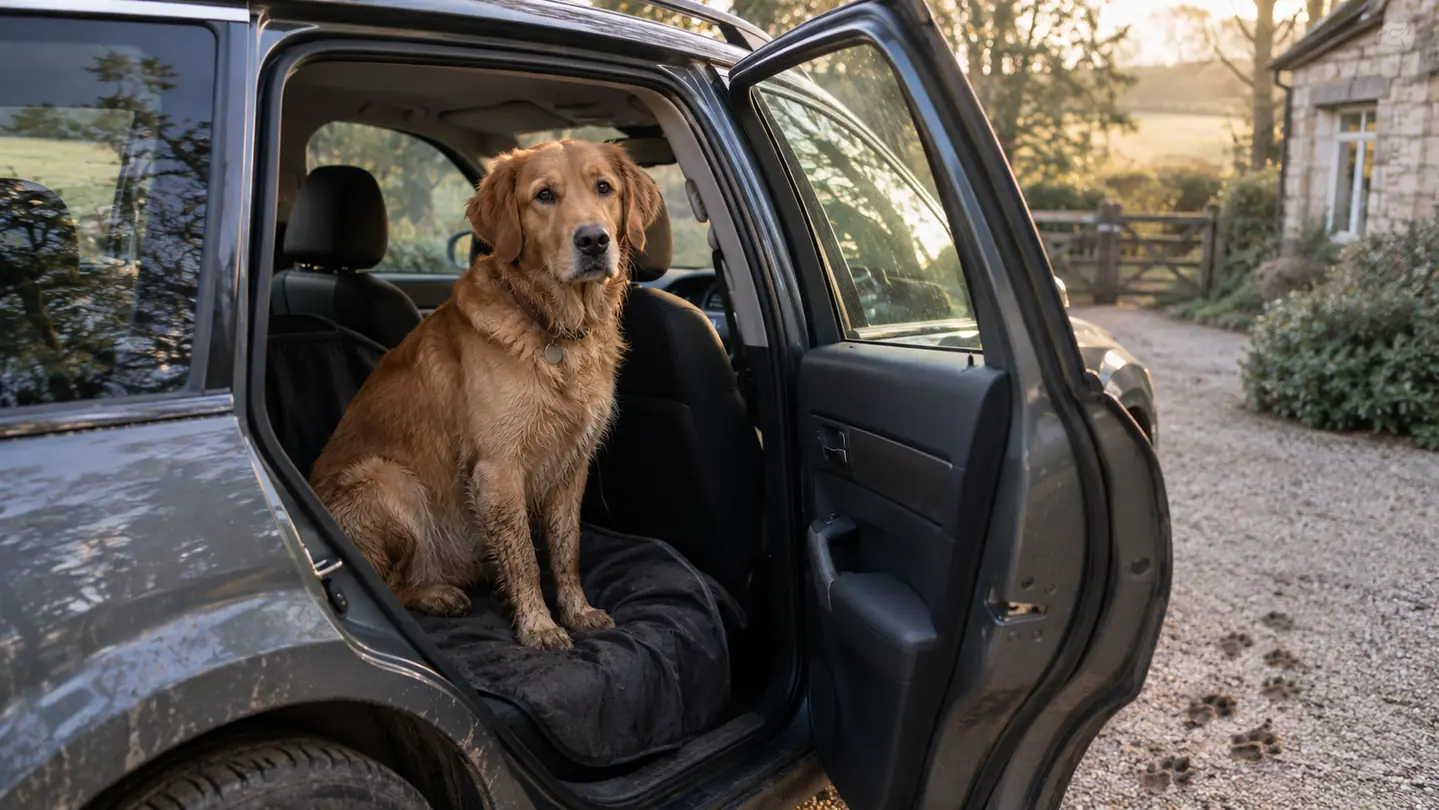
Scout is 18 pounds of terrier mix with opinions, and for the first two years I had her, the back seat of my Outback paid for every one of them. Cloth seats. A dog who turns around three times before she sits down. Mud from the park, hair that worked itself into the fabric like it had been hired to do it, and one August afternoon involving a dropped ice cream cone. I drove around for a month with two beach towels bunched up in the back, and towels do not solve this. Towels slide. Towels bunch. Towels leave the gap between the seat cushion and the seat back wide open, which is exactly where a dog puts a foot when you brake.
The fix for me was a hammock. I bought the URPOWER dog car seat cover the second week of January, ten months ago, with my own money on Amazon, and it has been on the back seat ever since. The listing says 600D Oxford fabric, waterproof, sized for a back seat close to 54 inches wide, with a nonslip backing to keep a dog from sliding. What follows is how I set it up, what I got wrong the first month, and the parts of the routine that have nothing to do with the cover at all.
The ten minute install that ended the towel problem
600D Oxford fabric, waterproof per the listing, fits a back seat close to 54 inches. This is the URPOWER hammock that has been on my back seat since January.
Amazon Check Today's Price on Amazon →Step 1: Measure Your Back Seat Before You Order Anything
The listing says it plainly and I will repeat it: confirm your backseat length is close to 54 inches before you order. Use a tape measure. A back seat that looks plenty wide from the driveway can come up short once you account for the curve at each end and the plastic trim at the doors.
I measured mine on a Tuesday night and got 53 inches across the widest point. If I had been driving a compact car instead of the Outback, I would have been right at the edge of the fit. Too wide and the ends fold up and dump the dog's feet into the footwell. Too narrow and the corners of the seat sit there bare, collecting exactly the mud you bought the thing to stop. Neither is a disaster. Both are avoidable with one measurement.
While you are out there with the tape, look at what is behind the seat. Headrests that adjust, a seat that splits and folds, a fold down armrest. None of it stops the cover from working, but it changes how fussy the first fitting is, and it is a lot easier to notice in your own driveway than in a parking lot with a dog on a leash.
Step 2: Hang It and Get the Straps Snug
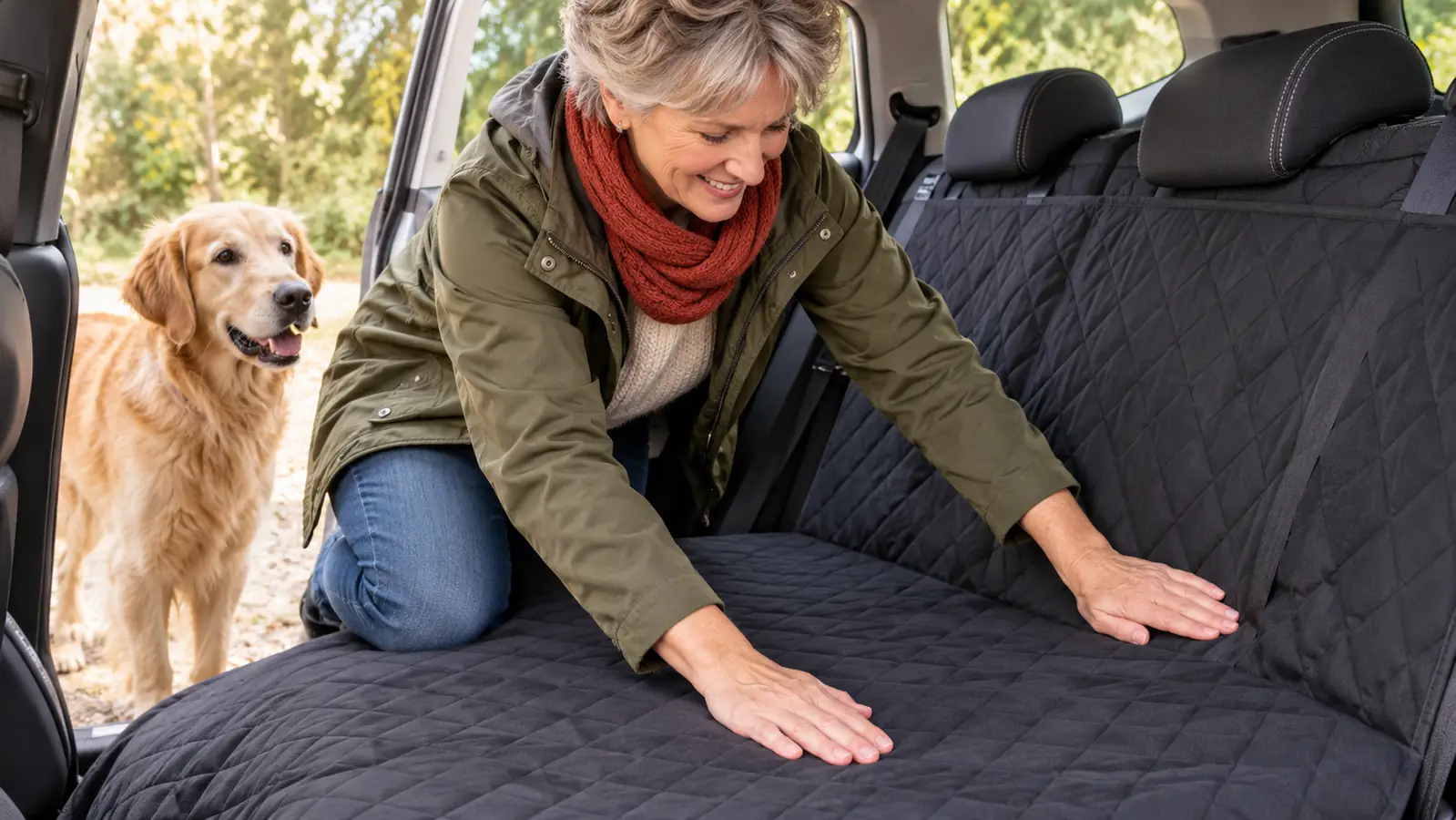
Lay the cover over the back seat, run the straps around the headrests, and settle the fabric down into the gap behind the seat. Ten minutes the first time, two minutes after that. A hammock is doing two jobs at once: covering the seat bottom, and closing off the footwell so a dog cannot slide forward into it.
Snug matters more than tight. Crank everything down like you are lashing a load to a trailer and the fabric pulls, and one corner starts working itself loose within a week. Leave it sloppy and the dog slides on every stop, which is the exact thing the nonslip backing is meant to prevent. Snug means the cover lies flat with no wrinkle under your hand, and the fabric gives a little when you press it.
Then check it again in three weeks. Mine needs a few minutes of snugging every few weeks, more once the cold sets in and the fabric stiffens. That is not a defect. That is a piece of cloth living under a moving animal. I check the straps on the same Saturday I check the tire pressure, because I will not remember a separate day for either one.
Step 3: Break the Dog In on a Boring Drive
Scout gets restless in the car. Not scared, restless. She stands, turns, stands again, and every one of those moves used to plant a paw on cloth. The first time I put the hammock in, she stood in the middle of it and looked at me like I had rearranged her living room without asking.
So the first trip was four blocks. The second was to the vet and back, which is not a fun errand but it is a short one. By the third week she was lying down before I got out of the driveway. Dogs do not need a speech about the new seat cover. They need the same surface, in the same spot, over and over, until it stops being interesting.
One more thing about the first drives. Do not stack this on top of four other changes the same week. New cover, new harness, new route, new stop, all at once, and you will not know which one the dog is unhappy about. Change one thing, drive around the block, change the next thing.
Pick the spot and keep it. Scout rides rear driver side, every time. A dog that knows where it lands does not spend the first ten miles of I-94 wandering around looking for a better seat.
Step 4: Clip the Dog In, Because a Cover Is Not a Restraint
Here is the part I would underline twice. A seat cover protects your upholstery. It does not hold your dog. If you want the dog to stay in place when you brake hard, that is a harness plus the attachment the harness listing describes, and it is a separate purchase from the cover.
Scout wears the Kurgo Tru-Fit Smart Harness. Steel nested buckles, five adjustment points, leash attachments at the front and the back, hand wash only. The five points took a long first fitting in the garage with the dog giving me looks, and hand washing is a chore I will not pretend to enjoy. But it holds her on the hammock, and it doubles as her walking harness at the Tomah hand-off, so it is one piece of gear doing two jobs instead of two pieces of gear rattling around the cargo area.
Do not guess the size. Measure the chest and put that number against the size chart on the listing. A loose harness is worse than no harness, and a tight one is a vet bill waiting to happen.
Step 5: Build a Parked-Stop Kit for the Cargo Area
The cover handles the ride. The parking lot is a different problem, and it is the part of a transport day that actually gets messy. I drive one rescue leg a month, second Saturday, about 90 miles down I-94 from Eau Claire to a truck stop in Tomah where I hand a dog to the next driver. Scout usually comes along.
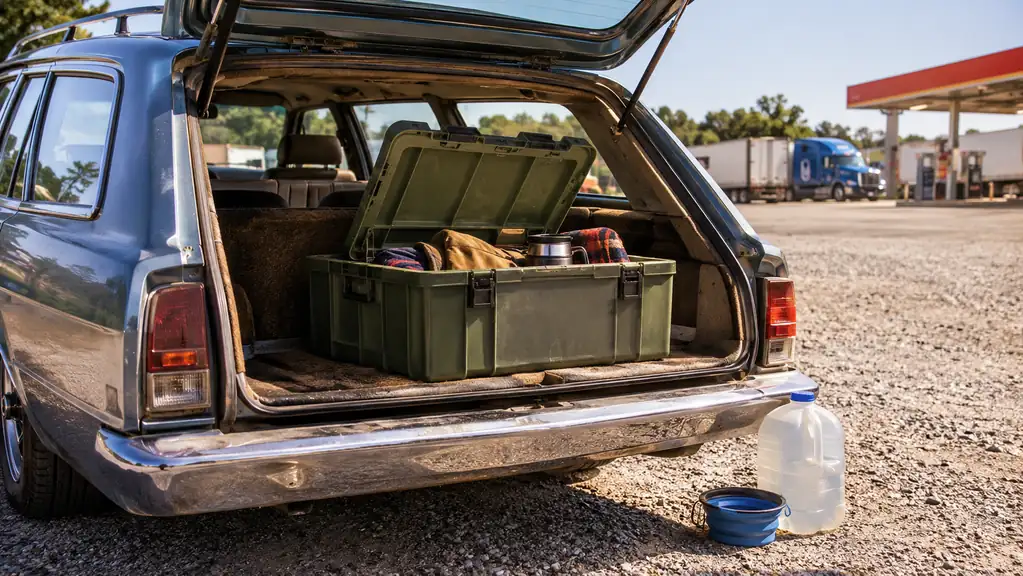
Two bowls live in that car, the SLSON collapsible ones. Soft plastic, 12 ounces each, a carabiner on the side, about half an inch tall folded. One clips to Scout's leash, the other sits in the glove box, and water rides in a jug in the cargo area. Every dog gets a clean bowl. That sounds fussy until you have watched two strange dogs share one at a gravel lot in February.
The crate is the other half of it. The DONORO pop up crate folds flat and lives in the cargo area. At a parked stop I open the hatch, set it up in the back, and it gives a dog a shaded place to stand and drink while I am right there next to it. Twenty eight by eighteen by twenty two inches, wire frame, zipper closure, three mesh windows, pad included. The listing title mentions medium dogs and then the listing itself warns that it just fits small dogs. Believe the small print. It is not for a chewer, not for a panicked dog, and never for a dog left alone in a car.
The open hatch matters as much as the crate. It makes shade, and shade is the difference between a dog that settles and a dog that pants for twenty minutes. I do not leave a dog in a parked car, hatch open or not, and I do not care how mild the day looks. The stop is a stop. Somebody stays with the dog.
What I Got Wrong the First Month
I left the old towels under the hammock for the first two weeks, because I did not trust it yet. All that did was bunch the towels up underneath and leave a lump Scout had to stand on, which is worse for her footing than the bare seat was. Take them out. The cover is waterproof per the listing. The towels underneath are not adding anything except an uneven floor.
I also fed her in the car once, at a rest stop, with the bowl sitting on the cover. That was the single dumbest thing I did all winter. A bowl on a soft surface tips. Water goes sideways. Kibble works its way into the seam and stays there. Now the bowl goes on the ground, always, and the dog eats outside the vehicle.
And I cranked the straps down hard the first time, on the theory that tighter had to be better. It pulled the fabric at one corner, and by the second week that corner was hanging. Snug, not tight. That one sentence would have saved me a Saturday morning and a lot of muttering.
Where the Cover Stops Helping
I am not going to tell you the URPOWER cover solved everything. A dog's nails still leave marks on the surface. Ten months in, mine has a faint map of Scout's comings and goings across it, the way a wood floor gets a path worn into it. The cloth seats underneath are untouched, which is the whole point, but the cover itself is not going to look new forever.
Hair still collects. It just collects on something I can lift out and shake in the driveway instead of something I have to dig out of a seam with a vacuum nozzle. Mud still dries and flakes. It flakes onto the cover. The difference is thirty seconds with a stiff brush versus an afternoon with a shop vac and a bad attitude.
And the hammock is not a crate and it is not a seat belt. It does nothing about a determined, unclipped dog who has decided to visit the front seat. In my car, dogs ride in the back. That is a rule I enforce with my right foot on the brake pedal, not a feature of the product.
What Else Helps
Three things earn their place in that car. The harness, obviously, since it is what actually holds the dog. A bath towel folded in the cargo area, which handles the worst of a wet February hand-off before the dog ever touches the hammock. And the water, which is a jug and two bowls and not much else.
I have watched other volunteers use the travel bottles with a built in trough. They look handy, one less thing to hold, and the dogs seem to take to them fine. I have not used one, so I will not pretend to have an opinion past that. Same with the plain bench cover I have seen in another volunteer's car. It covers the seat bottom and leaves the footwell wide open, which is fine for a dog that lies down and stays down for the whole trip. Scout is not that dog.
The last thing that helps is not gear at all. It is leaving ten minutes earlier than you think you need to. Most of the mess I have cleaned up over five years came from rushing a dog out of a car at a hand-off, and a rushed dog is a muddy dog. Give yourself the ten minutes and half the problem never happens.
Ten months, one 18 pound terrier, one transport leg a month, and the cloth under that hammock still looks like cloth.
Measure the seat, then order the URPOWER hammock
600D Oxford fabric, waterproof per the listing, fits a back seat close to 54 inches. It has been on my back seat for ten months, and the beach towels are still in the garage where they belong.
Amazon Check Today's Price on Amazon →