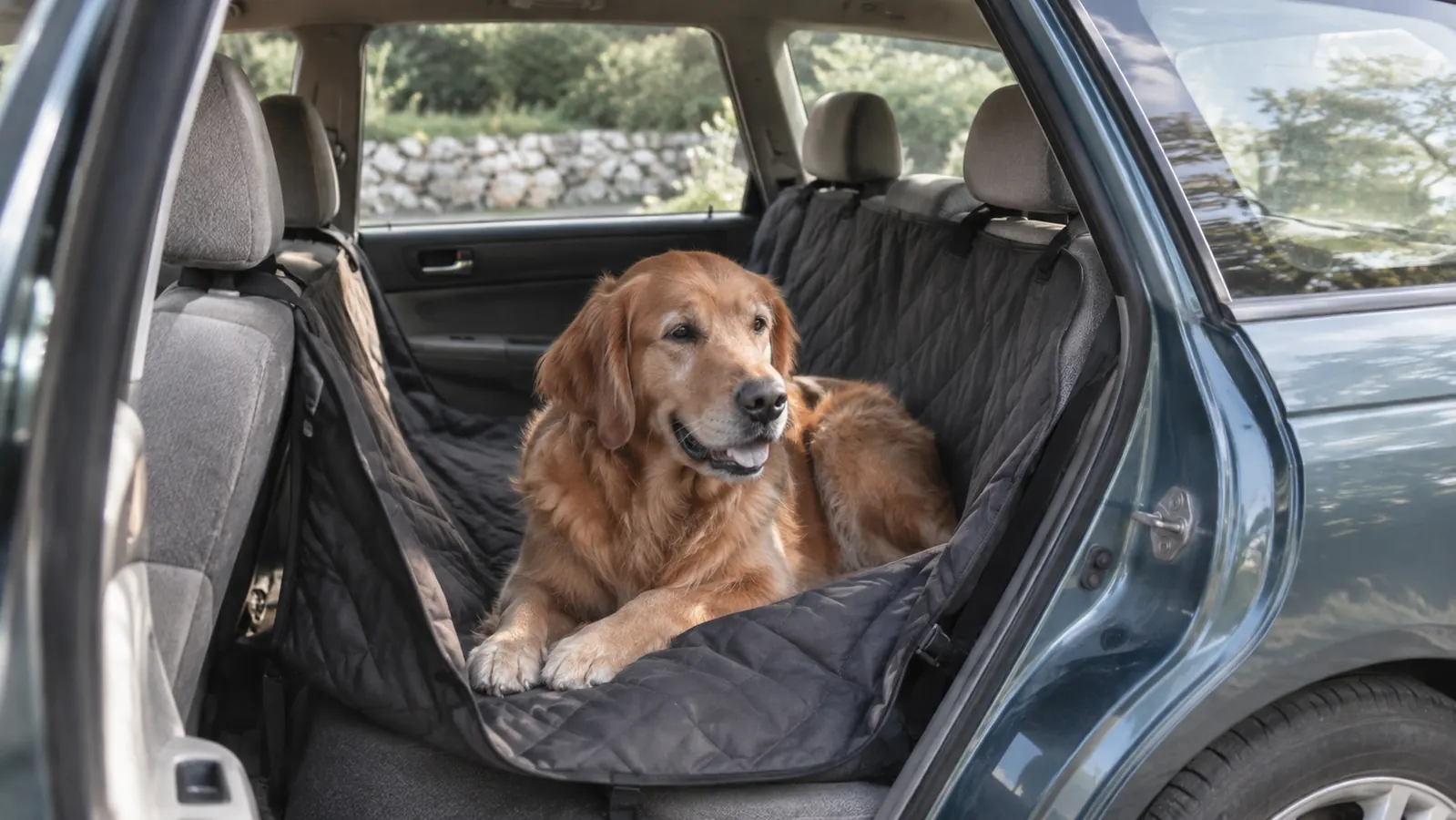
Two things keep a dog off a cloth back seat. One is a flat cover that drapes over the cushion and partway up the seatback. The other is a hammock that hangs between the front and rear headrests and turns the back seat into a shallow fabric bowl. I have used the second kind for ten months. I have watched the first kind from three feet away in another volunteer's car, and I have formed an opinion about both.
The short answer is this. For a dog who rides in the back alone, the URPOWER hammock covers more of the car and handles mud better than a plain bench cover. For a car that carries people in the back seat as often as it carries a dog, the plain cover is less work. That is the trade in one breath, and the rest of this is the detail behind it.
Some background, so you know what I am basing this on. I am Gail Brandvold. I retired from dispatching school buses in Eau Claire, Wisconsin, and I drive one rescue transport leg a month down I-94 to a truck stop in Tomah. My dog is Scout, a six year old terrier mix, eighteen pounds, and she gets restless in the car. The car is a used Subaru Outback with cloth seats. I bought the URPOWER hammock the second week of January and it has been on the back seat since. Before that I used bath towels, which is where most people start and where most people stay until the towels slide onto the floor one too many times.
| URPOWER Hammock | Basic Bench Cover | |
|---|---|---|
| What it covers | Hangs from the front and rear headrests, so the cushion, the seatback and the gap down into the footwell are all behind fabric | Lies over the cushion and partway up the seatback, footwell stays open |
| Water and mud | Listed as 600D Oxford fabric, six layers, waterproof | Typically a quilted pad, and the one I saw had a towel under it |
| Sliding when you brake | Listed with four levels of protection to stop the dog slipping | Shifts when the dog turns around, needs straightening |
| Dog coming over the console | The front panel sits between the back seat and the console | Nothing there at all |
| Carrying a person in the back | Front straps come off and the panel folds away first, about two minutes | Lift it off, shake it out, a person sits down and uses the belt |
| An older or heavy dog getting in | The dog steps over the front panel to reach the seat | The dog steps straight onto the cushion |
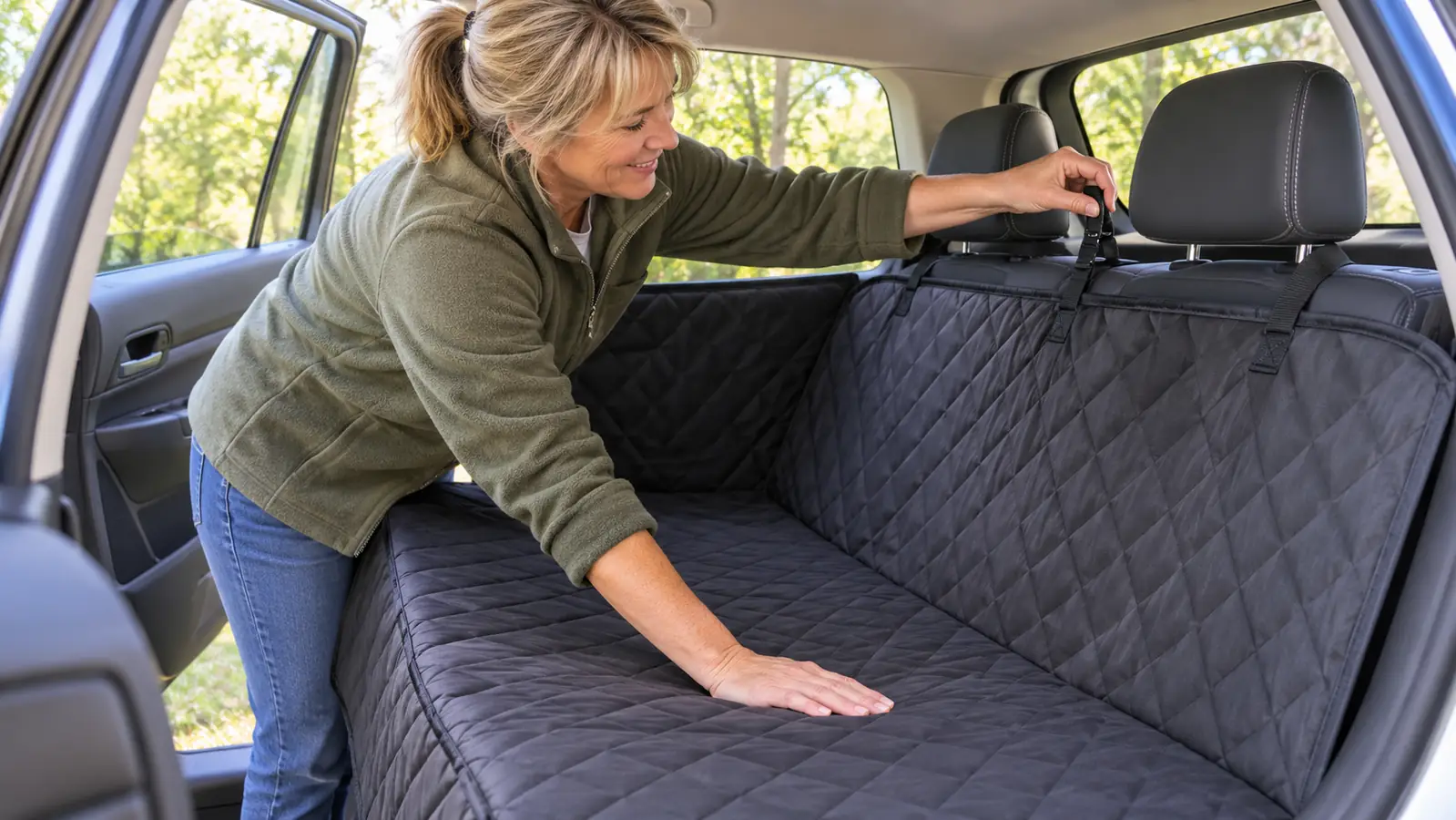
| First installation | Straps and clips around four headrest posts | Hooks and straps around the seat |
Where the URPOWER Hammock Wins
Coverage is the whole argument. The hammock hangs from the front headrests and from the headrests behind, so the seat cushion, the seatback and the drop into the footwell all sit behind fabric. When Scout turns around twice before she settles, which she does every single time, her feet stay on the cover instead of finding the crack between the cushion and the seatback. Hair goes where the fabric goes. That is a much smaller cleaning job than chasing it out of a seam with a vacuum nozzle and a lot of patience.
The second thing a hammock does is keep the dog in back. The front panel sits between the back seat and the console, so there is a physical wall where a flat cover has a wide open gap. With a plain cover a dog can step over the console and put a paw on the gear shift or on the driver's arm. That is why dogs ride in the back seat, and it is why a barrier of some kind earns its place in a car that gets used for transport.
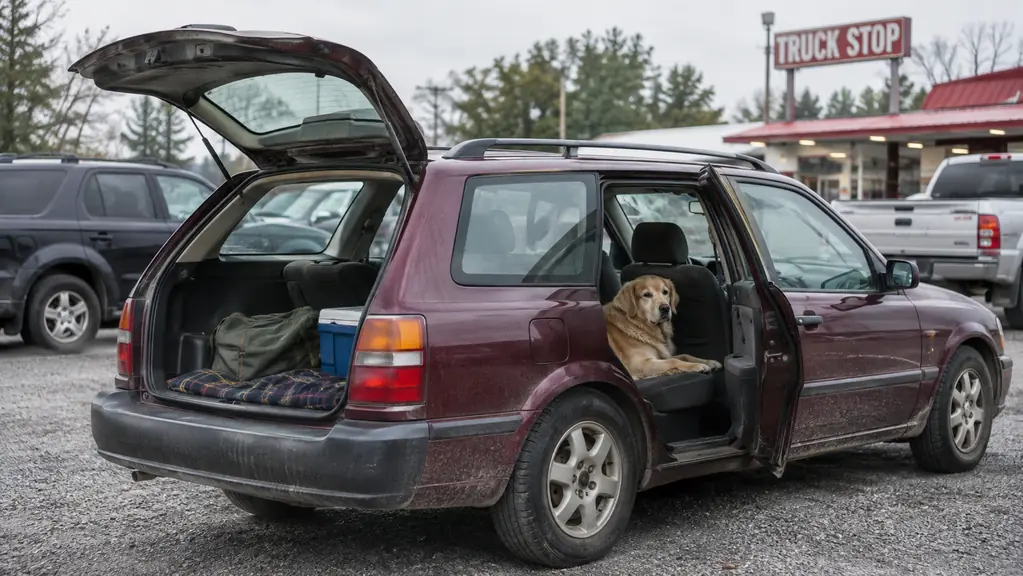
Transport days are where the difference really shows. The Tomah hand-off happens in a gravel lot with the hatch up, and dogs come off the previous leg with wet feet from the grass and mud from the edge of the lot. Scout gets back in and walks the full length of the seat before she lies down, every time, like she is inspecting it. The fabric takes it. What 600D Oxford and six layers and a waterproof backing means in practice is that a muddy paw leaves a mark I can wipe with a rag instead of a stain that sets in the cushion underneath. The first Saturday I ran with it was the middle of January, well below freezing, and a beagle mix came off the leg with salt and slush on all four feet. He stood in the middle of the seat and shook himself. The cover caught all of it. I wiped it down at the truck stop with a rag I keep in the cargo area, and the cloth under it was dry when I got home that afternoon. With the towels I used to run, that would have been a load of laundry and a wet seat in the cold.
A muddy paw leaves a mark I can wipe with a rag instead of a stain that sets in the cushion underneath.
Where a Basic Bench Cover Wins
The plain cover wins the passenger test and it is not close. The one I know best belongs to another volunteer, a quilted pad that lies over her cushion and hooks around the seat. When her grandson needs a ride home from practice, she pulls the cover off, shakes it out, and the boy sits down and uses the seat belt. With the hammock, a person in the back means unclipping the front straps and folding the front panel out of the way first. I have done it. It takes a couple of minutes and it is a nuisance in the rain.
The other place a flat cover wins is the dog getting in. A hammock has a front panel, which means the dog has to step over it to reach the seat. Scout is six and she manages fine. A stiff dog, or a heavy dog with sore hips, may not want to, and lifting a large dog over a panel is worse than lifting him onto a flat seat. If your passenger is older, bigger, or both, the flat cover is kinder at the door.
And a flat cover is a simpler object. Fewer straps, fewer clips, nothing to snug up, nothing to fold. When somebody asks me which one to buy for a dog who already lies down and stays there, I say the plain one, because the hammock's advantages are all about containing a dog who moves. If your dog does not move, you are paying in fuss for a feature you will not use.
What Ten Months Did to It
Two things have worn. The straps need snugging every few weeks. The hammock does not come loose on its own, but it slackens, and a slack hammock sags down into the footwell and stops doing its job. I check the straps when I vacuum the car, which is about once a month, and that is enough to keep the fabric sitting level. The first time I noticed it was a Sunday in March, after Scout had spent an hour getting in and out at a rest stop outside Menomonie. The front panel had dropped a good three inches and her front feet were down in the gap. Two pulls on the straps put it back where it started. Now I do it on the same schedule as checking the tires, and it has not caught me out since.
The other is nail marks. Scout's nails leave light scuffs on the surface of the fabric. Nothing has torn, the stitching is intact, and the seat under it is dry and clean, but if you want the cover to look new after a year of a dog walking on it, it will not. I would rather have scuffs on a cover than on cloth seats, so that is a trade I made on purpose and would make again.
Cleaning is a vacuum and a rag with dish soap for the muddy spots, then a full dry before Scout gets back in. It has never needed more than that, including after a wet October Saturday when three dogs in a row tracked through the back seat.
Ten months on a cloth seat and it still does the job it was bought for
600D Oxford fabric, waterproof, and sized for a back seat close to 54 inches. 4.6 stars from more than 47,000 ratings. Measure your back seat before you order.
Amazon Check Today's Price on Amazon →The 54 Inch Question
Before you buy either kind, measure. The URPOWER listing asks you to confirm that your backseat length is close to 54 inches before ordering, and it says the cover fits sedans, SUVs and compact to mid size trucks. That is a real instruction, not fine print. A cover that comes up short leaves the ends of the seat bare, and the ends are exactly where a dog's hind feet land when she jumps out.
The Outback's back seat measured just under that, and the cover reaches the ends with a little to spare. It bunches slightly at the corners. I have not had a problem with it, and I would rather have a little extra than a gap. If your back seat is well past 54 inches, look at a cover sized for a full size truck instead of forcing this one. Take the measurement across the cushion at its widest point, not across the door opening. Those two numbers are not the same, and the second one is what people usually guess at while standing in the driveway.
What the Listing Says and What I Noticed
The listing says the cover is waterproof, that it is made of six layers of fabric in 600D Oxford, and that it has four levels of protection to stop the dog slipping when you brake. What I can tell you from the driver's seat is that the cover does not slide forward when I stop hard, and Scout does not slide on it either. It also says the material has no smell, and I did not notice one after the cover sat in a closed car through a hot week in July.
It carries a six month warranty, and at ten months I have not needed it. The stated weight is a couple of pounds and the fabric folds up small enough to go behind the seat when I take it out for a wash. That is the whole maintenance story.
How a Transport Saturday Actually Goes
I load Scout on the rear driver side with her harness clipped in, and the hammock is what her feet are on. When a small dog comes aboard for the leg, the carrier goes on the rear passenger side on the same cover, and the cover catches the hair and the damp that comes with any dog who has been in three cars before mine. At the truck stop I open the hatch, water goes into a bowl, and the cover gets a quick brush with my hand before the next dog goes in.
The reason this matters to me is not that I care about the seats. It is that a clean, contained back seat keeps the leg short and calm. A dog who is slipping around on a bare cushion, or climbing over into the front, makes a ninety mile drive feel like three hundred. The hammock mostly solves that on its own, and the harness handles the rest. The rest stop work takes me about ten minutes, most of it spent getting water into a bowl without pouring half of it on the cover. Snow on the ground makes it longer. Hair brushes off the fabric with a glove, which is not true of the quilted pad in the other car, where it works into the stitching and stays there until she vacuums it out.
Who Should Buy Which
Buy the URPOWER hammock if your dog rides in the back alone, if your seats are cloth, if your dog moves around back there, or if you do transport driving where strange dogs get in your car. Buy it if you have ever had a dog come over the console, or if mud and hair in the seam between cushion and seatback drive you up the wall. It is also the better pick if you want one thing installed and left installed, because it stays put.
Buy a basic bench cover if you routinely carry people in the back seat, if your dog is old, heavy, or reluctant to step over anything, or if your seats are already worn enough that you do not care. Buy it if your dog lies down and stays down. It costs you less fabric and less fuss, and for a lot of cars that is the right answer.
If you are in the middle, the deciding question is simple. Does your dog stay where you put her? If yes, a flat cover is enough. If she paces, turns, climbs, or tries to join you up front, the hammock is the one that ends the argument.
One decision, made once, then forgotten about
If your dog moves around in the back seat, this is the version that holds her there. Confirm your back seat is close to 54 inches first, then check today's price.
Amazon See the URPOWER Hammock on Amazon →