I have driven one rescue transport leg a month for five years. Second Saturday, about 90 miles down I-94 from Eau Claire to a truck stop in Tomah, where I hand the leash to the next driver. My dog Scout, a six-year-old terrier mix who weighs 18 pounds, usually rides along. The first thing I bought for those Saturdays was not fancy. It was the URPOWER back seat hammock, the second week of January this year, after one wet dog turned my Outback's cloth seats into a mud map. Ten months later it is still in the car.
These are the ten reasons it earned that spot. Not because a hammock cover is exciting. Because it removes a category of work from a day that already has enough moving parts. If you drive dogs for a rescue, or just haul one muddy dog of your own, the reasons will look familiar.
The cover that lives in my Outback, not on a shelf
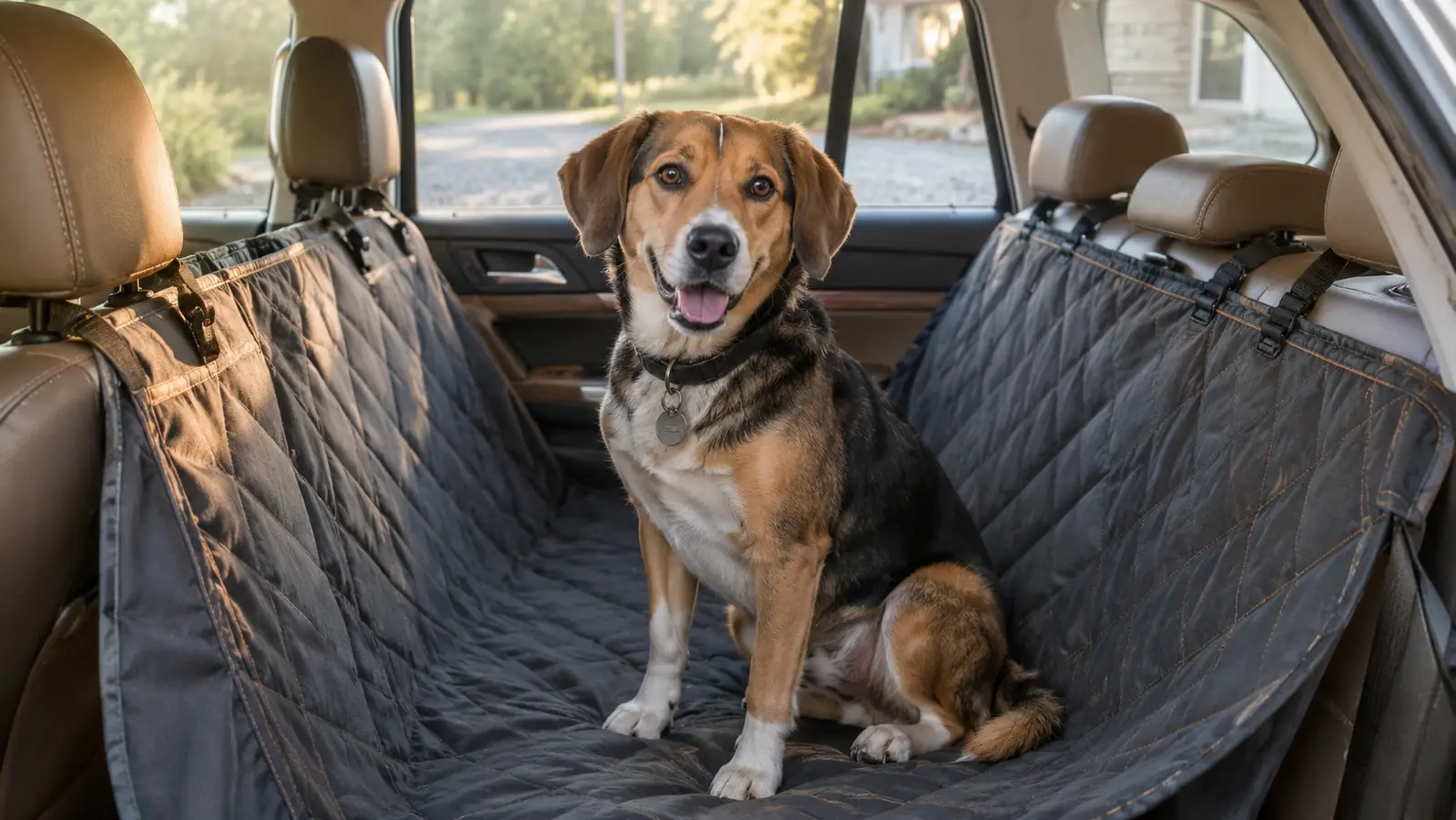
The URPOWER hammock fits a back seat close to 54 inches and uses six-layer waterproof fabric. It is the first thing I put in the car for transport Saturday and the last thing I think about.
Amazon Check today's price on Amazon →It keeps transport mud off the cloth seats
The dogs I move are not show dogs. They come out of a shelter kennel, a foster driveway, or another volunteer's car, and they bring whatever is on their feet. The URPOWER cover is waterproof and made of 600D Oxford fabric, so mud and water stay on the cover instead of soaking into the seat. I shake it out, wipe it down, and the cloth underneath is still cloth. That sounds small until you have spent a Sunday scrubbing a seat with a bucket.
It closes the footwell gap a bench cover leaves open
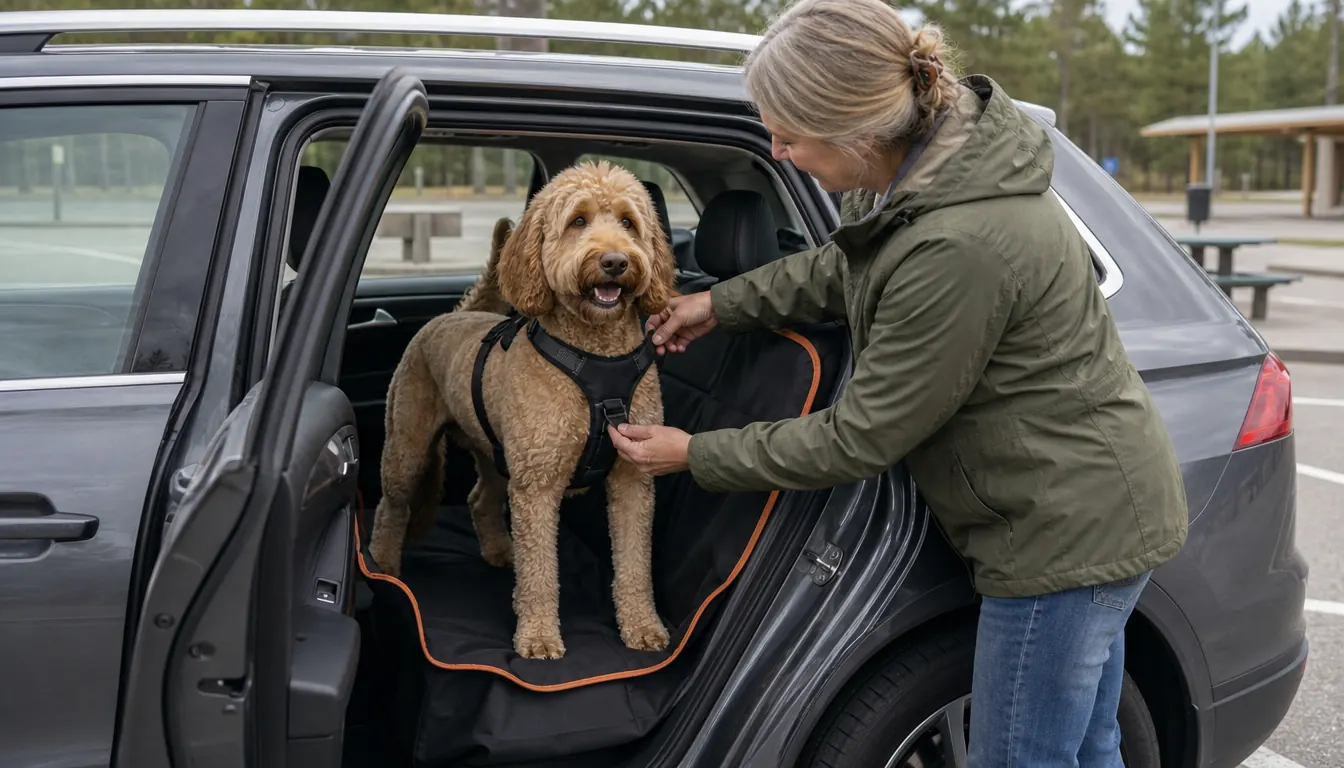
A hammock style cover spans the back seat and the space in front of it. That matters for a dog that steps forward when the car slows. On a plain bench cover, the dog's front feet can drop into the footwell. On the hammock, they meet fabric. I am not going to call it a restraint. It is not. Scout still wears her Kurgo harness and is clipped in. But the hammock gives her a floor where there used to be a hole, and that is one less thing I have to watch in the mirror.
A wet dog at the hand-off does not soak through
One February transport had a dog come out of the rain with a wet coat and wet feet. I dried him as best I could with a towel, put him on the hammock, and drove the next leg. The seat stayed dry. The listing calls the fabric waterproof and says it has six layers. I did not cut it open to check the layers, but I can tell you what happened on that drive. Water stayed on top. The seat under it did not. That is the test I care about.
The four-level nonslip backing helps when I brake
The listing says the cover has four levels of protection to keep a dog from slipping when you brake. I drive I-94, not a racetrack, but a truck stop exit comes up fast and a dog that is standing will slide. Scout still shifts. The cover is not glue. But the hammock surface does not turn into a slip and slide every time I touch the brake, and the cover itself stays put on the seat better than the old towels did. The towels were the reason I bought this.
It gives a restless dog a defined place to stand
Scout is not a dog who sleeps for 90 miles. She stands, turns, sits, stands again. On bare cloth she wandered toward the console. On the hammock she has a boundary. She can stand on the driver side, turn around, and lie down without stepping onto the seat back or into the door panel. I did not buy it to train her. I bought it to protect the seat. The defined space was a side benefit, and it is the one I notice every single transport Saturday.
Cleanup is a shake, a wipe, and back in the car
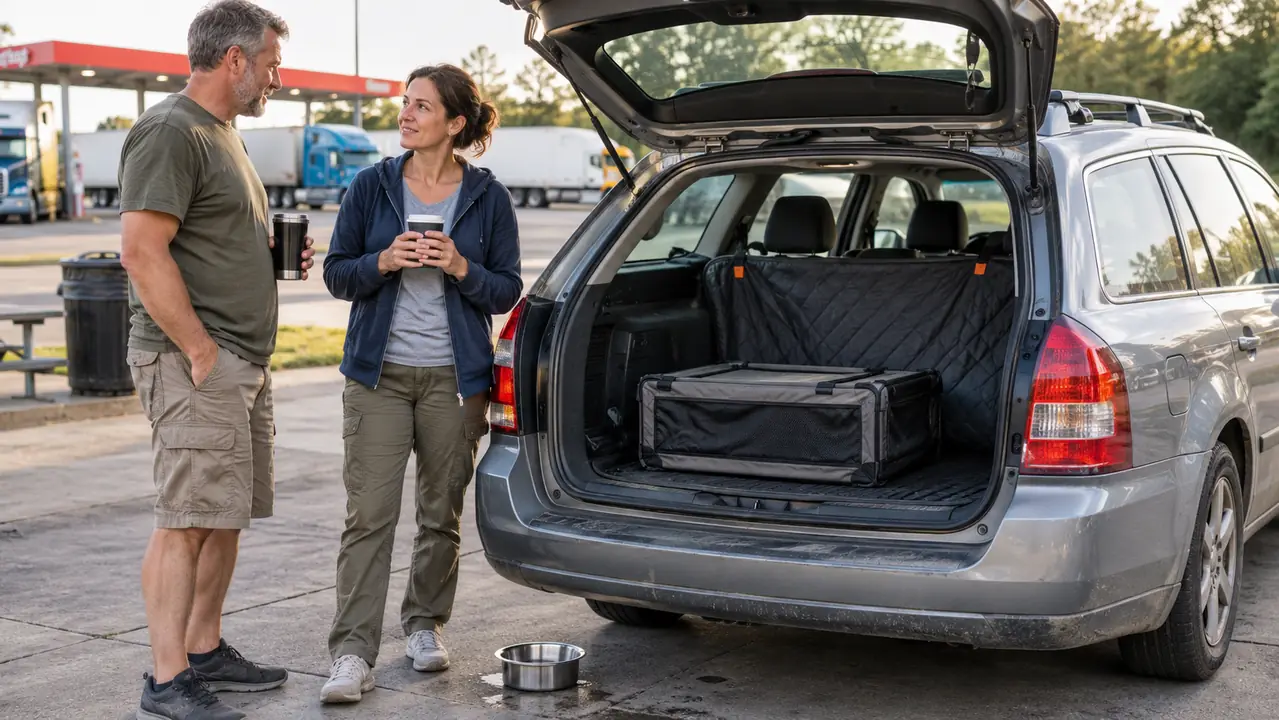
The cover stays installed on the back seat all year. When a dog leaves hair, I take it out, shake it, and wipe it with a damp cloth. The 600D Oxford fabric does not hold onto mud the way cloth does. I do not machine wash it because the listing does not tell me to, and I am not going to guess. A shake and a wipe have been enough for ten months. The one thing that does not come off is nail marks. A dog's nails leave small marks on the surface. I knew that going in.
It stays put between transport Saturdays
I installed it the second week of January and it has been in the car since. It does not fold itself up or slide onto the floor between trips. The attachment points need a snugging every few weeks, especially after I have hauled the seat forward for cargo. That is a two-minute job, not a project. The rest of the month it is ready. When the second Saturday comes around, I do not have to remember where I put it. It is already doing its job.
It handles the ordinary vet trip, not just transport day
Scout goes to the vet in the same car. She goes to the hardware store. She goes to the feed store where the floor is always wet. The hammock stays in place for all of it. A cover that only comes out for rescue duty would be a cover I forget to put back. This one is part of the car now. The seat is protected on a Tuesday afternoon, not just on the one Saturday a month when I have a transport leg. That is what makes it worth the space it takes.
It leaves room for a carrier on the passenger side
When I have a small transport dog or a cat, the Sherpa carrier rides on the rear passenger side of the hammock. Scout rides on the rear driver side in her harness. The cover spans the seat, so both can fit without one sitting on bare cloth. I do not put Scout in the carrier and the harness at the same time. The carrier is for the small passenger, or for Scout's vet visits. The hammock is the floor under both. That arrangement has worked for every leg so far.
It ends the towel scramble before every leg
Before this, I kept a stack of old bath towels in the cargo area. They slid around, bunched under Scout, and soaked through on a wet day. I would get to the hand-off and spend five minutes shaking them out while the next driver waited. The hammock replaced the towels. I install it once, snug it every few weeks, and stop thinking about it. Ten months in, the seat under it still looks like a seat. That is not a glamorous result. It is the result I wanted.
What I'd Skip
I would skip a basic bench seat cover if your dog moves around. Another volunteer has one in her car, and I have seen it do its job: it covers the seat cushion and leaves the footwell open. For a dog that stands and steps forward, that is not enough. I have not owned one, so I am not going to pretend I tested it for months. I also would not buy a hard-sided carrier for a dog that just needs to lie down on the back seat. The rescue has one, and it is the right tool for a cat or a small dog that needs walls. It is not the right tool for Scout. Different job, different gear.
Ten months, one transport Saturday a month, and the cloth under the hammock still looks like cloth. That is the whole test.
If your back seat has to survive a dog, start here
The URPOWER hammock fits a back seat close to 54 inches, uses waterproof 600D Oxford fabric, and has stayed in my Outback for ten months. Measure your seat before you order. Then put it in once and get on with the drive.
Amazon Check today's price on Amazon →