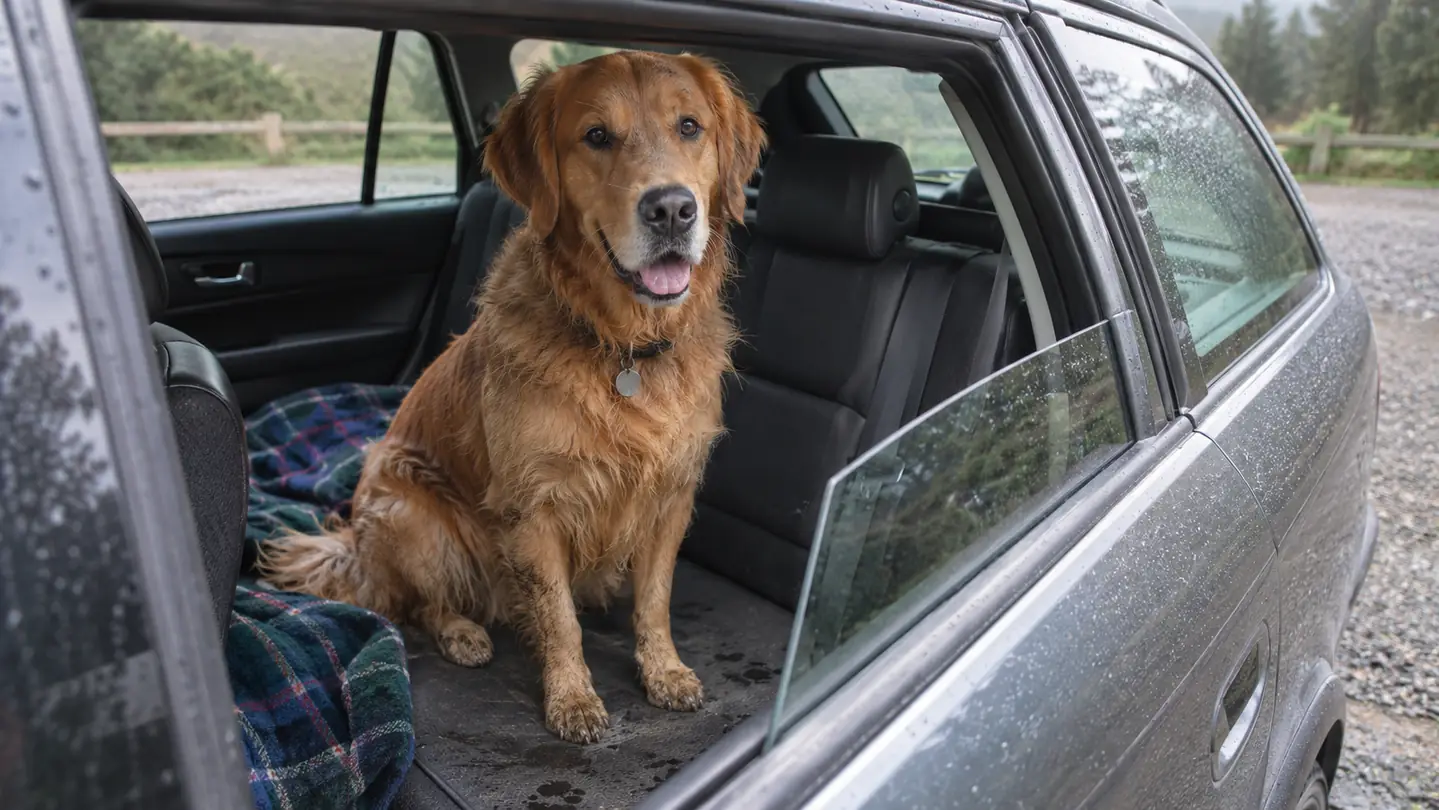
The first thing I bought for my car was not for me. It was for the seats. I drive one rescue transport leg a month, ninety miles down I-94 from Eau Claire to a truck stop in Tomah, and I have been doing it for five years now. The dogs that come off the shelter van are muddy, they are nervous, and they do not care in the slightest that my Outback has cloth seats. My own dog Scout, a six year old terrier mix who weighs eighteen pounds and gets restless about four miles in, is the easy passenger. The transport dogs are the reason I bought the URPOWER back seat hammock the second week of January, ten months ago.
Before that it was bath towels. Two of them, laid over the seat, sliding into a heap the first time anybody turned around. I would shake them out at the truck stop, put them back damp, and drive home with the windows cracked. If you have done that in January in Wisconsin you already know how well it works. The hammock was not a fun purchase. It was a stop pretending purchase. Ten months later I can tell you what it has done, what it has not done, and the three small things that still irritate me.
The Quick Verdict
Ten months of transport runs and the cloth seats underneath are still the color they were in January. Straps need snugging and nails leave scuffs, and neither of those is a reason not to buy it.
Amazon Check Today's Price →Ten months of muddy dogs, and the seats are still seats
The URPOWER back seat hammock has been installed in my Outback since the second week of January. It survives transport Saturdays, vet visits and mud season without coming out of the car.
Amazon Check Today's Price on Amazon →How I've Used It
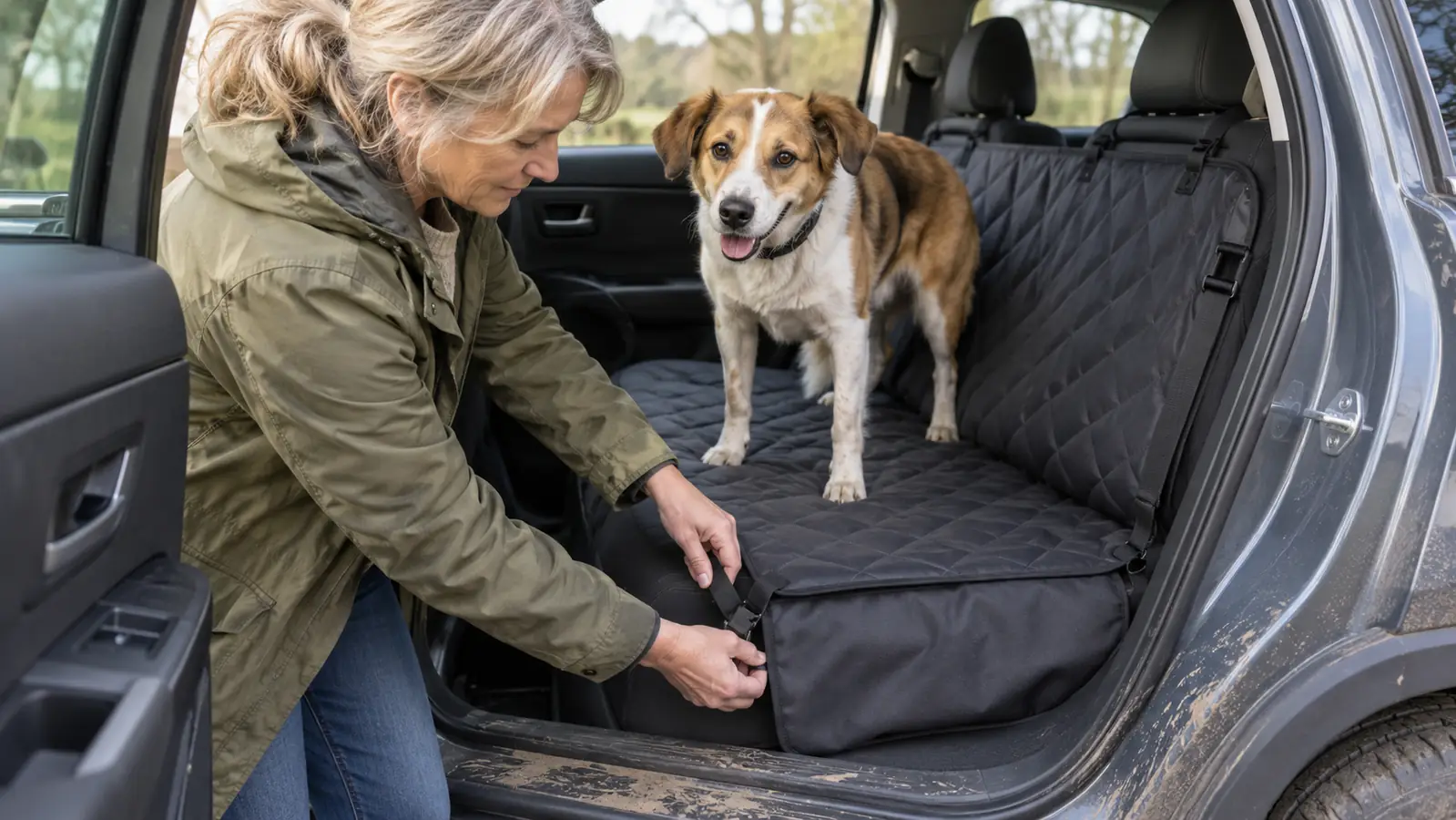
The hammock went onto the back seat the second week of January and it has not come out since. That is not a line I wrote for effect. It is a fact about my memory. It stays installed all year, through mud season, through the July stretch when Scout sheds enough to build a second dog, and through every transport Saturday in between. Scout rides rear driver side, in her harness, clipped in. When a small transport dog or a cat is aboard, the carrier sits on the rear passenger side. The hammock is under both of them.
A transport Saturday starts at the rescue at seven, where I get the paperwork and whoever is riding that leg. Ninety miles later I hand the dog off to the next driver at the truck stop in Tomah and drive home. The dog in between is not mine, is usually not calm, and has already been in at least one vehicle that morning. Sometimes it is a twenty pound mix who sleeps the whole way. Sometimes it is a dog who stands up, turns around, sits down, stands up again, and repeats that for forty miles. The hammock has been under every one of them.
The other twenty nine days a month it is me and Scout and ordinary errands. Vet visits. The farm supply store. A run to Menomonie to see my sister. My husband Dale does not drive transport legs, so this is not a two driver household and I am not going to pretend it is. What matters is that one seat cover has handled both jobs without me thinking about it, and I have thought about it plenty since January, which is the whole reason for writing this down.
What 600D Oxford Fabric Means After Ten Months
The URPOWER listing calls it 600D Oxford fabric and says it is built from six layers. I am not a fabric person, so here is what that has meant in a car with a dog in it. Mud does not soak in. It sits on top, dries, and then it brushes off, which is the difference between a five minute cleanup at the truck stop and a trip to the upholstery shop. Water behaves the same way. I have poured from a jug into a bowl resting on that seat and gotten a splash on the fabric, and the splash stayed a splash. That is the whole claim, and it has held.
The material has not torn. There are no split seams and nothing has come apart at the edges, and I say that as someone who expected a cover at this level to give out by spring. The listing also says the material has no smell to it, which was true out of the box. Ten months in, mine smells like dog. That is not the cover's fault. That is what happens when a cover spends ten months in a car with dogs in it.
Where the fabric shows its age is the surface itself. Scout's nails have left a scatter of light scuff marks across the driver side half of it, and they are not coming out with a wipe. They are not holes, they are not tears, and I do not think anyone would notice them from the front seat. But if you are the kind of person who wants the thing to look new in year two, understand that it will not. It is a working surface and it looks like one.
The Second Saturday Test
The real test is not my dog. Scout gets in, turns twice, lies down, and is asleep before the end of the block. The real test is a dog who has been standing in a wet parking lot in Warrens, has been loaded into a stranger's Outback, and has no reason at all to be calm about any of it. That dog does not walk to the middle of the seat and settle. That dog circles.
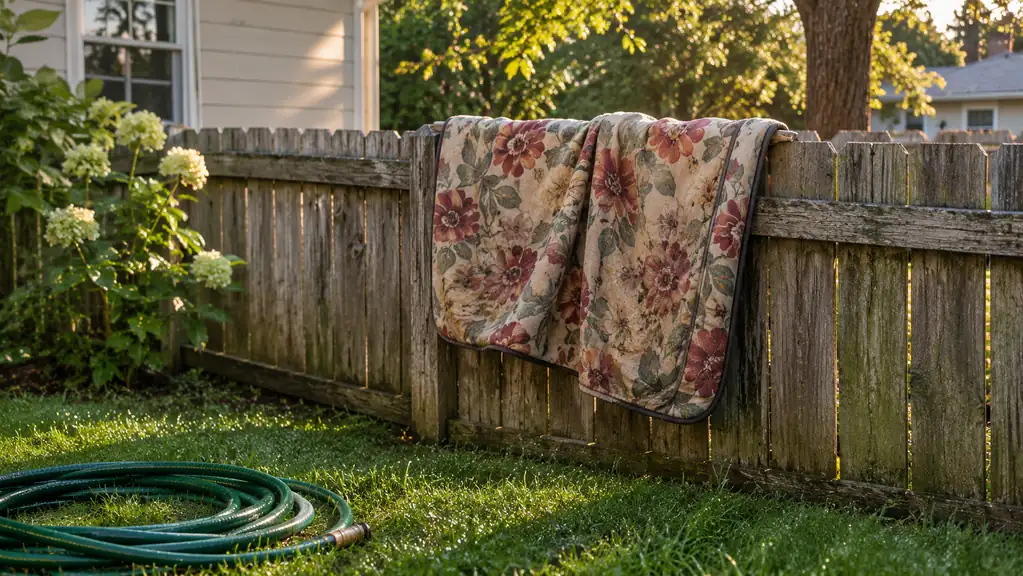
Ten months of second Saturdays have produced exactly one mess I would call an accident, and I am not going to describe it in detail in a review you might be reading over breakfast. What I will tell you is that when I got home, the seat underneath was dry. I took the cover off, wiped it down with a rag, and hung it over the fence for the afternoon. The cloth seats in this car are still the color they were in January. That is the entire case for the product, and it is a good one.
The rest of a transport day is the hand off. At Tomah I open the hatch, pull the pop up crate out flat, and set it up in the back for whoever is waiting. Water goes into one of the collapsible bowls. The dog gets a few minutes on grass. Then the next driver pulls up, we move the dog and the paperwork, and I put everything back. The hammock stays where it is for that entire process, which sounds like a small thing and is not. Anything I have to take off and put back on at a truck stop in February is a thing I will eventually stop using.
Where It Slips and Where It Doesn't
The listing says the cover has four levels of protection to stop a dog from slipping when you brake. I tested that the way I test everything, which is to say I found an empty lot on a Sunday and stopped harder than I needed to. Scout, in her harness and clipped in, slid maybe two inches forward and then the harness caught her. The cover itself moved a little under her. Neither of those is a failure. The cover is not a restraint and it does not pretend to be. The harness does that job, and I would not drive a dog on this thing without one.
What does happen, slowly, is that the straps work loose. Not in a day, and not in a way that has ever left the cover hanging off the seat. It is a matter of snugging them up again every few weeks, usually when I notice the front edge starting to sag toward the footwell. I do it in the driveway with the door open and it takes a minute. If you are someone who will not do that, the front edge will eventually sag and you will decide the product is bad. It is not bad. It needs a minute of attention four or five times a year.
The Fit, the Fold, and the Other Annoyances
The listing says this fits a back seat close to 54 inches long, and it says to measure before you order. Do that. My Outback's back seat is inside that number and the cover sits within the seat with a little room at each end. In a wider truck it would be a different story, and I have no business telling you how it would fit in a vehicle I have not put it in. Measure the seat, not the door opening, and compare it to the number in the listing.
Taking it off is the other chore. It comes away in one piece and it does not fold small, so it lives over the fence or on a shelf in the garage rather than in a bag in the cargo area. Twice this year I have hosed the worst of the mud off it and let it dry in the sun, and both times it went back on the seat before I went to bed, because leaving it folded on a shelf is how it ends up staying there.
The last thing is not an annoyance so much as a reality. This is a cover. It keeps mud, hair, drool and worse off the cloth. It does not keep a determined dog in the back seat, it does not stop a dog from getting down onto the floor, and it does not make a nervous dog calm. Scout's restlessness in the car is a thing my vet and I have talked about, and no piece of fabric has ever fixed it. If your dog is anxious in a vehicle, that is a conversation for your vet, not a shopping decision.
What I Compared It To, and What I'd Still Consider
I have seen the alternative up close, in another volunteer's car, and it was a flat bench cover. Same general idea, no hammock shape reaching toward the front. It protects the seat fine and it costs less to think about. What it does not do is close off the footwell, and on a transport day that footwell is where a nervous dog wants to be. I have never owned one, so I am not going to tell you it is worse. It is a different tool for a different dog.
At the rescue I have also watched people load a hard sided carrier into a back seat, and for a dog who panics in a vehicle that is the right answer. A carrier is a container, not a seat cover. It is also not something you leave sitting in the car all year for a dog who rides twice a week. If I had a dog who could not settle at all, I would be having a different conversation with my vet and probably buying a carrier. For a dog who rides reasonably and gets muddy, the hammock is the simpler thing, and it is the one that has stayed in my car.
What I Liked
- Kept mud, water and one transport day mess off the cloth seats for ten months
- The 600D Oxford surface has not torn and no seam has split
- Stays installed year round, so there is nothing to remember on transport morning
- Fits a back seat close to 54 inches, which covers my Outback with a little room at each end
- Nonslip enough that a harnessed eighteen pound dog moved about two inches in a hard stop
Where It Falls Short
- Straps work loose and need snugging every few weeks
- Nail scuffs on the surface will not wipe out
- It is a cover, not a restraint and not a containment device
- Does not fold small, so it lives on a shelf or over a fence
- A back seat well outside 54 inches will not be fully covered
When I got home, the seat underneath was dry. That is the whole case for the thing, and it is a good one.
Who This Is For
This is for the person with cloth seats and a dog who gets in wet. It is for the volunteer who drives a transport leg and does not want to think about the upholstery on top of everything else on the list. It is for the owner who will spend one minute in the driveway four or five times a year snugging straps, and who understands that a seat cover is protection, not restraint. If your back seat is close to 54 inches and your dog is anywhere from small to large, this is a sensible thing to own.
It also suits the household that leaves things installed. If you are the type to put a cover on for the dog park and take it off again afterward, you will not get your money's worth out of the convenience. The value here is that it is already there when you open the door, including on the mornings you did not plan for.
Who Should Skip It
Skip it if your dog panics in the car or keeps trying to climb into the front seat. A hammock is not a barrier and it will not hold a determined dog. Skip it if you want the seat itself to look factory new in three years, because nails leave marks on any cover you put down. Skip it if your back seat is well outside that 54 inch figure, because a cover that does not fit is worse than towels. And skip it if what you actually need is a carrier or a crate for a small dog, because a seat cover does none of that work.
One more thing, and I mean this plainly. Never leave a dog alone in a parked car. Not for five minutes, not with the windows down, not in October. Everything I have written here is about a dog riding with a person in the vehicle, and nothing about a seat cover changes that.
If your back seat is close to 54 inches, this is the one that stayed in my car
Ten months, one transport leg a month, and the cloth underneath is still cloth. Measure your back seat against the 54 inch figure in the listing before you order, then check today's price.
Amazon Check Today's Price on Amazon →