The first time I hauled a margarine tub of water down I-94 for a rescue transport, I learned what a bad idea that is. The tub slid off the seat on the first curve. Water went under the seat cover. Scout spent the next twenty miles with one wet front leg and a look on her face that said I had planned this poorly. That tub is why I bought the SLSON collapsible bowls in the second week of March, and it is why one of them now rides clipped to Scout's leash while the other sits folded in the glove box.
Here is the thing about a long drive with a dog. You plan the stops around yourself, because you are the one who needs the coffee and the bathroom, and the dog gets whatever is left over. Then you reach a rest area, you are already back in the car with the engine running, and the dog has had nothing since the driveway. Collapsible bowls are not complicated gear. The work is in the routine around them, and the routine is what this piece is about. Five steps, nothing to buy beyond what is already in the car.
Most of what I know about this came from getting it wrong. The margarine tub. The bowl set on the seat instead of the floor. The stop I skipped because I was making good time. None of it was a disaster, it was just messy and slow, and a dog does not get a vote on any of it. So the routine below is the version that finally worked, written the way I would explain it to a new volunteer at the rescue before her first leg.
The two bowls that replaced my margarine tub
SLSON collapsible bowls, two to a pack with two carabiners, 12 fluid ounces each, about half an inch tall folded. Mine went into the Outback in March and they have not left since.
Amazon Check today's price on Amazon →Step 1: Fill a jug, not the bowl, before you leave the driveway
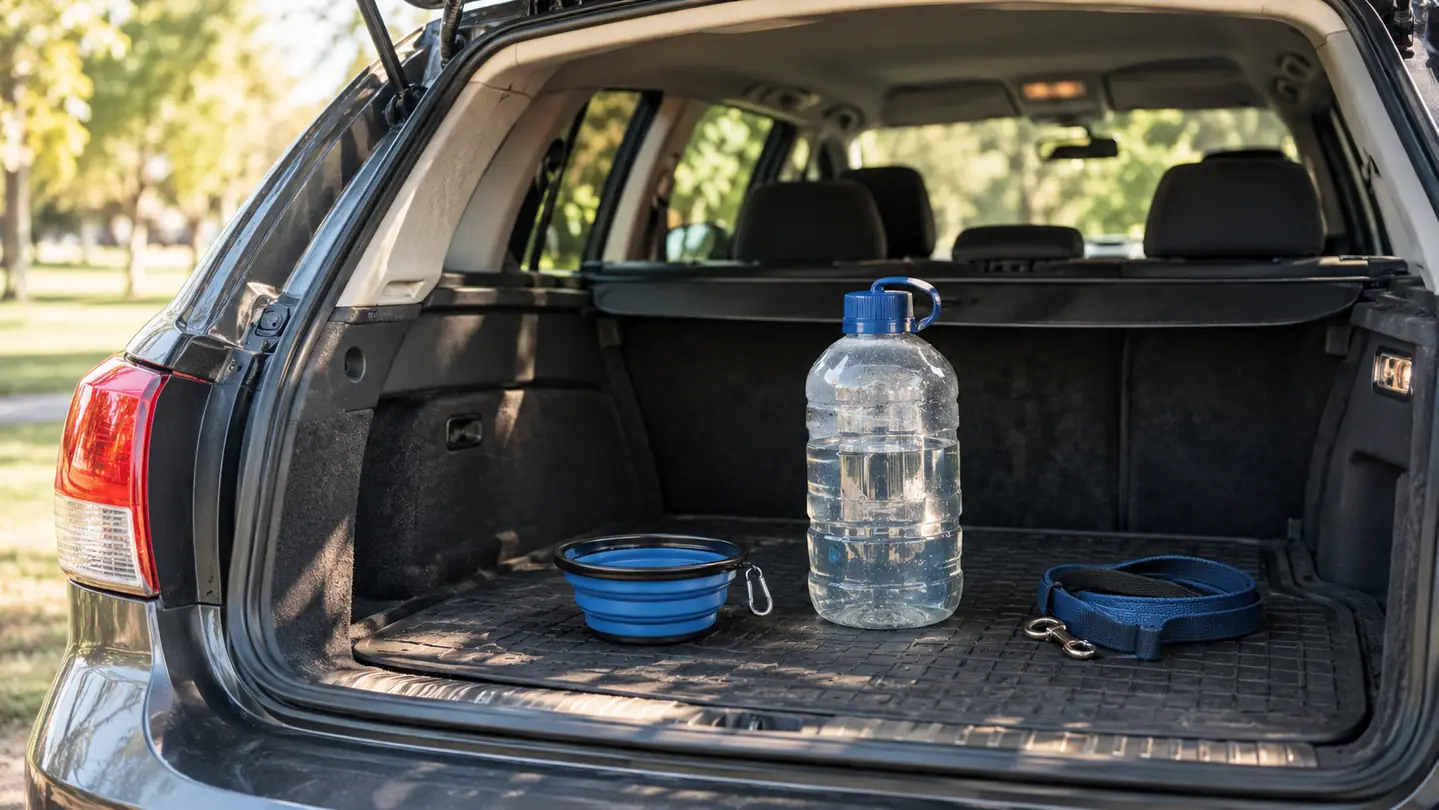
The bowls ride folded and empty. That is the whole point of them. An open bowl of water in a moving car is a bowl of water that ends up on your seat, no matter how smooth you think your driving is. I fill a jug and set it in the cargo area behind the back seat, next to the folded crate, and neither bowl gets opened until the car is parked with the engine off.
When I first started this, I filled the bowl at home and set it on the seat beside Scout. She stepped in it before we reached the end of the street. Twelve fluid ounces sounds like nothing, and it is nothing, right up until it is spread across a cloth seat on a cold morning. Now the jug does the carrying and the bowl does the serving, and the two jobs stay separate.
How much water you take depends on the drive. My leg is about 90 miles, so a half gallon is plenty, even with a second dog riding along for part of it. A full day in the car is a different trip and I would take more. The point is that the water supply lives in one place that does not tip over, and the bowl is only out for the four minutes it takes a dog to drink.
Step 2: Clip both bowls where your hand already goes
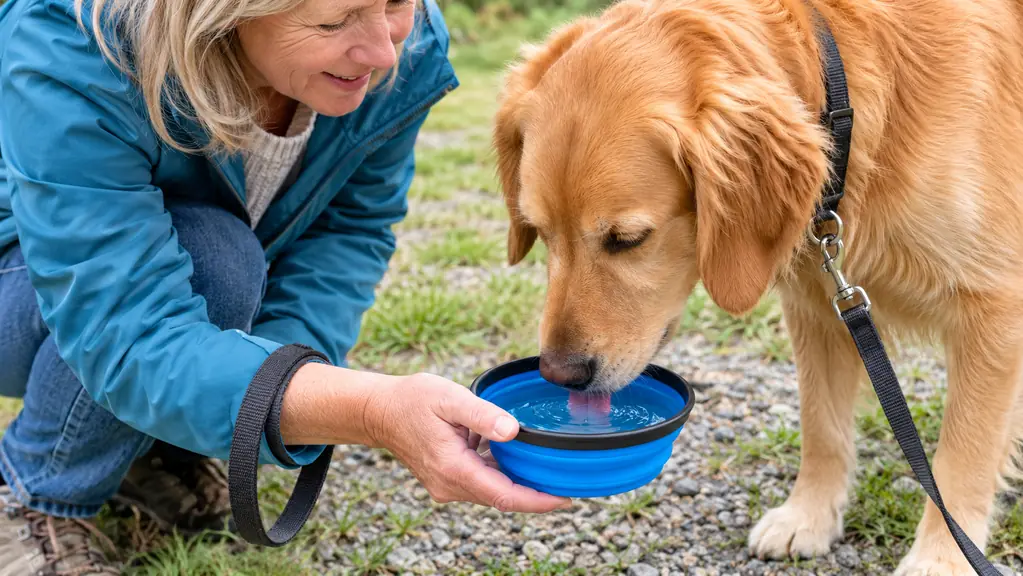
Each bowl comes with a carabiner, and the carabiner is light duty. It is for clipping, and that is all it is for. Mine goes on Scout's leash near the handle, because the leash is the thing I am already holding when I step out of the car. The second bowl lives in the glove box, folded flat, so I am not digging through a tote bag at a truck stop with a dog on my wrist.
Folded, each bowl is about half an inch tall, which is why they vanish into a glove box, a jacket pocket or the side pocket of a door. Two of them take up less room than a pair of gloves. That matters more than it sounds if you have ever tried to find a water dish in a loaded car at dusk while a dog is pulling toward a grassy strip.
Do not clip a carabiner to a collar and call that a restraint. A light clip is not built to hold a dog that decides to lunge at a squirrel. Scout rides clipped to a harness, and that is a separate piece of gear with separate hardware. The clip on the bowl is for keeping the bowl off the ground and out of the mud puddle at the edge of the lot.
Step 3: Stop on the dog's schedule, not on yours
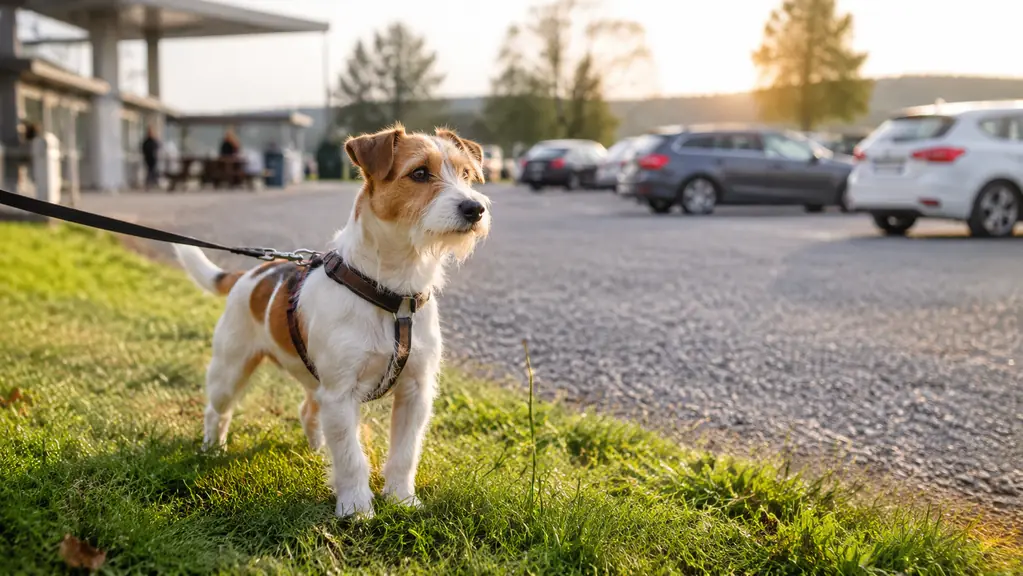
I drive one transport leg a month, on the second Saturday, down I-94 from Eau Claire to a truck stop in Tomah. That is one water stop in a 90 mile trip, sometimes two when the weather is warm. I pick the rest area with grass and shade over the one with the vending machines, because a dog will not drink standing on hot pavement with semis idling two rows over.
The order at the stop matters, and it took me a while to settle it. Leash on, walk first, let the dog sniff and take care of business. Water second. Then a few minutes of standing around doing nothing, which is the part I had to learn. Get back on the interstate two minutes after a dog has a drink and you have spent a stop for nothing.
Scout has been restless in the car since she was a pup, so a stop is also the only time she gets to be a normal dog for ten minutes. Dale, my husband, does not drive the transport legs with me, which means the whole schedule is mine to run. I would rather stand in the shade for an extra five minutes than listen to a dog shift and sigh for the last thirty miles.
Step 4: Pour an inch, and give each dog its own bowl
This is where people overdo it. Each bowl holds 12 fluid ounces, which is not a lot. Scout is 18 pounds, and she gets an inch or so in the bottom, then a refill if she wants one. A full bowl mostly gets knocked over and wasted, and a bowl set on uneven ground will tip if a dog so much as bumps it with a nose.
Give each dog its own bowl. That is not fussiness. On a transport leg I may have Scout plus a small dog riding to Tomah, and they do not share a dish, and the dog I hand off does not drink out of the one Scout used. Two bowls in the pack covers it. Each one gets emptied, shaken out and wiped, and the soft plastic is ready for the next stop.
The bowls are not only for water. One and a half cups of kibble fits in one, and on a longer transport day I have used a bowl for food at the hand-off so the next driver is not opening a bag on the shoulder of a road. It is a shallow dish, so a dog that eats fast will push kibble over the rim. A folded towel underneath fixes most of that.
One jug, two bowls, ninety miles. The water is the easy part. Stopping before the dog needs it is what I had to practice.
Step 5: Empty, wipe and reset before you pull out
Before the car goes back into gear, the bowl gets emptied onto the grass, shaken out and folded. Water sitting in an open bowl in a parked car is a spill waiting to happen, and in warm weather it is worse than a spill. The jug goes back in the cargo area standing upright, capped, where it cannot roll under a seat.
Then I do the count. Leash in hand, bowl back on the clip, second bowl back in the glove box, harness clipped, hatch closed. Same order every time. It takes ten seconds, and it means I am not pulling over four miles down the road to check something I could have checked in the parking lot.
Nobody stays in the car at a stop. Not Scout, not a transport dog, not for two minutes with the windows cracked. If I need to be inside a building, the dog comes with me or the stop waits. That is not a rule I made up, it is the one thing every volunteer at the rescue says in the same words, and it is the reason a water stop happens on grass with a leash in my hand and not through a cracked window.
What Else Helps
The bowls are the simplest part of the setup and the easiest thing to forget. They are not the whole car. A back seat hammock is what saved my cloth seats back when the margarine tub was still in rotation, and it stays installed all year. A wide mouth jug is easier to fill at a rest area sink than a bottle with a narrow neck. A towel lives under the passenger seat, and it is not for the dog.
The other thing that helps is knowing what you are not going to do. I have watched a volunteer work a travel bottle with a built in trough, the kind you squeeze so water comes up into a little tray. It does the job for one dog on a short walk. What I do not care for is the cleaning, because there is a tube and a cap and a tray to get at. A bowl opens up and wipes out and there is nothing hidden in it. That is my preference, not a rule, and if the bottle is what you already own, use it. I saw it on another volunteer's dog at the Tomah hand-off.
Scout also rides on the hammock in a harness, and the harness doubles as her walking harness at every stop, so there is one less thing to swap at the side of the road. The folded crate stays in the cargo area for parked stops with the hatch up, and it is not something I drive with a dog inside it. None of that is about water. All of it is about not standing at a rest area for twenty minutes trying to find something.
Warm weather changes the plan and not in a complicated way. I take a bigger jug, I stop more often, and I park in the shade if there is any. If the pavement is hot enough that I would not walk on it barefoot, the dog does not either. None of that is gear advice, it is just the difference between a stop that helps and a stop that does not. The SLSON bowls have been through one full summer on that plan and they are still the first thing I reach for.
At the Tomah hand-off I usually have about five minutes with the next driver while the dogs get sorted. That is when the second bowl comes out of the glove box, gets a pour from the jug, and goes back. It is a small thing. It is also the difference between handing over a dog that has had a drink and handing over one that has not, and I have been the driver on both ends of that hand-off.
If you drive rescue legs, or you just take your dog to the lake twice a summer, the routine is the same. Water travels in a jug. The bowl stays folded until the car is parked. The stop happens before the dog is desperate. Everything else is details.
One on the leash, one in the glove box
Soft plastic, 12 fluid ounces each, folds flat enough to disappear into a glove box. The two pack is what makes the one bowl per dog rule easy to keep.
Amazon Check today's price on Amazon →